Smokeless Fire Pit Review: Wellness Center Must-Haves
By Priya Raman • 1st Jan
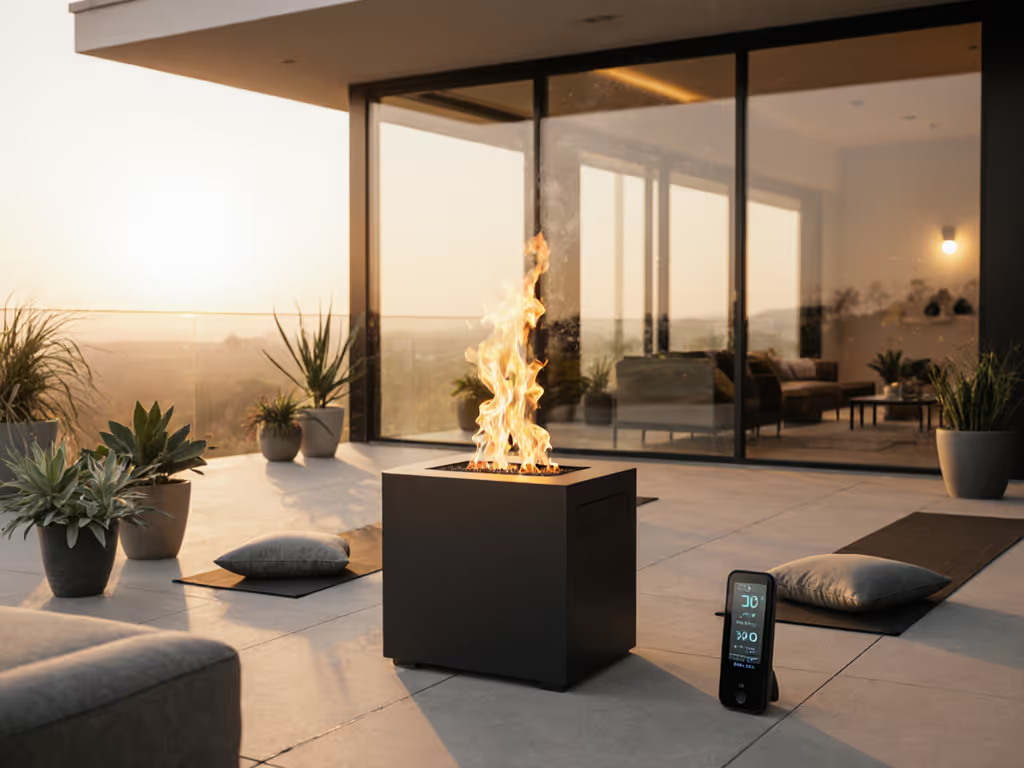
When your smokeless fire pit review centers on therapeutic fire features, you're not just evaluating flames, you're measuring how deeply comfort settles into your clients' bones. As a human factors specialist, I've seen how a well-tuned fire feature transforms wellness spaces from merely pleasant to profoundly restorative. This isn't about backyard parties; it's about creating sanctuaries where breath flows freely, conversations feel effortless, and every guest (especially those with sensitivities) stays immersed in the moment. Forget flashy flames or raw BTUs. True therapeutic value lives in the quiet details: how smoke disperses, where heat radiates, and whether that subtle warmth invites deeper meditation. Let's explore what makes commercial wellness fire pits more than decor; they're healing infrastructure.
Why Smokeless Matters Beyond "Just Less Smoke"
Wellness centers operate in a delicate ecosystem. A drifting plume isn't just annoying, it disrupts the very purpose of your space. When clients inhale particulate matter (PM2.5) from inefficient combustion, cortisol levels rise. Asthma flares. That hard-won calm during yoga shatters. Low emission fire features aren't a luxury; they're clinical necessities. Yet many "smokeless" claims crumble under scrutiny, especially in tight urban courtyards or under pergolas where wind patterns trap smoke.
Comfort is calibrated: distance, height, flame, and mindful hosting.
In residential testing, Consumer Reports confirmed no wood fire pit eliminates smoke entirely, they merely reduce it through engineering. But for meditation space fire pits, this distinction is critical. A wellness center's fire feature must clear PM2.5 thresholds before clients even notice smoke. How? Through double-wall combustion chambers that superheat secondary airflows, burning particles before they escape. Look for units validated by third-party labs (like CR's Yonkers testing) measuring both ignition-phase smoke and sustained burn efficiency. The best commercial wellness fire pits reduce emissions by 70%+ compared to open pits, verified by infrared thermography showing complete combustion.
The Human Cost of "Almost Smokeless"
I once mapped thermal comfort at a studio's evening sound bath. Wind shifted, smoke curled toward seated guests, and nine people subtly adjusted their postures: pulling scarves over faces, shifting away from the pit. None complained. But their bodies screamed discomfort. This is where low emission fire features earn their keep. In wellness settings, smoke isn't just physical; it's psychological. It triggers hypervigilance ("Will this bother my asthma?"), fracturing the group's collective focus. True therapeutic value emerges only when the fire disappears into the background, a silent partner in healing.
Thermal Comfort Zoning: The Unspoken Host
Comfort isn't a single temperature; it's a system of zones. For data on warmth radius and comfort zones, see our heat distribution study. At a backyard movie night years ago, I logged thermal shifts at knees versus shoulders as wind direction changed. We lowered the flame, lifted the pit, and added a screen. Suddenly, jackets came off, conversations flowed, and the dog stopped circling. That lesson defines my work: therapeutic fire features demand intentional thermal choreography.
Designing Warmth for Group Wellness
Wellness centers face unique challenges: clients in light clothing (during yoga), uneven seating radii, and cross-breezes from open doors. Yoga studio heating solutions must solve three silent crises:
- The Knees-Get-Cold Paradox: Traditional pits radiate heat upward, leaving lower bodies chilled. Clients shift constantly, disrupting alignment. Fix: Elevate the fire bowl 18-24" off ground level. This aligns radiant heat with seated hip height, not just faces.
- Wind-Induced Smoke Recirculation: In tight courtyards, gusts bounce smoke back into the space. If your site is breezy, consider these wind-resistant fire pits for more stable flames. Fix: Curved wind guards (not flat screens) that redirect airflow upward, validated by smoke pencils during site assessments.
- "Too Hot/Cold" Seating Rings: Heat isn't uniform. Without zoning, front-row clients sweat while others shiver. Fix: Place pits at 45-degree angles to seating clusters, creating overlapping warmth pockets. Test with IR thermometers at 18", 36", and 60" radii.
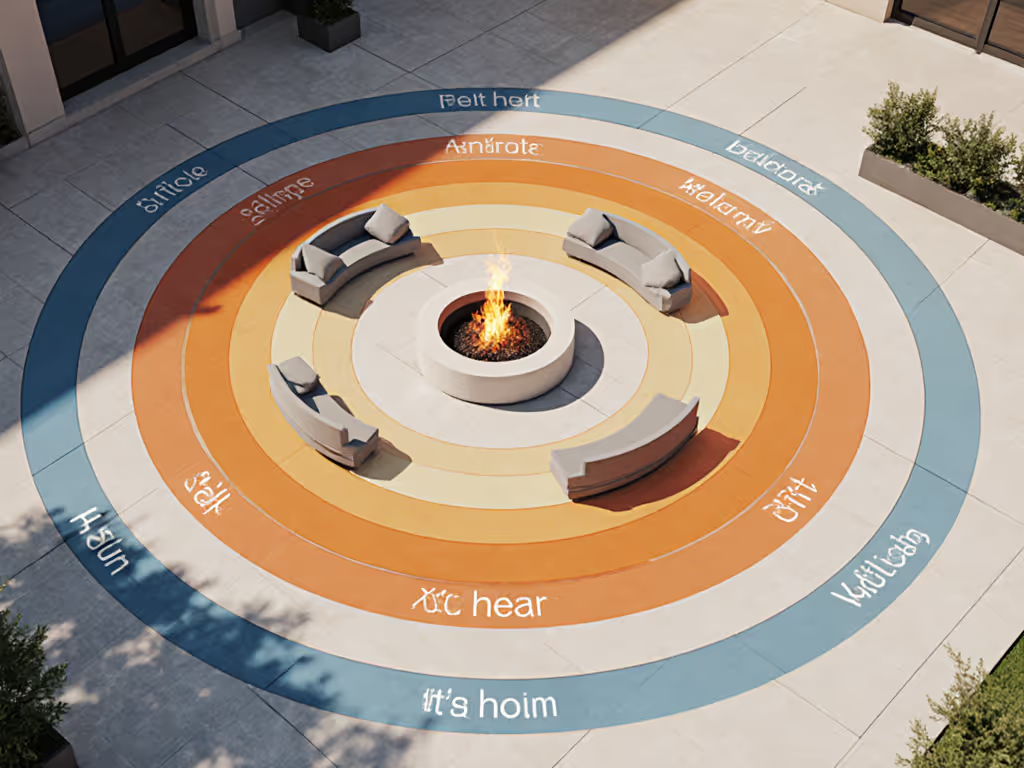
This isn't guesswork. It's stepwise tweaks grounded in ASHRAE Standard 55. The most effective smokeless fire pit review for wellness centers measures not just BTUs, but thermal satisfaction rates across client body zones. Units like the Breeo X Series (tested by Popular Mechanics) excel here, their tapered design pushes heat laterally, not just vertically. But commercial spaces need more: removable ash pans for quick post-session cleanup, and bases that maintain safe deck temperatures (<120°F at 6" clearance) per ASTM F2651 safety standards.
The Quiet-Host Ethos: Engineering for Effortless Care
Wellness centers thrive on invisibility. Guests shouldn't notice how you keep them warm; only that they are warm. This is the quiet-host ethos: reducing friction points so hospitality feels intuitive. In fire features, this means:
- Zero Operational Noise: Gas fire tables with open flames often emit a faint hiss (45+ dB). To minimize hiss and turbulence, compare burner technologies before you buy. For meditation, target <35 dB, achievable through precision burner ports that diffuse gas flow. Propane units like the Ninja Fireside360 (tested in lab conditions) hit this mark when paired with ceramic logs that muffle combustion sounds.
- Frictionless Transitions: Clients shouldn't dodge ember mats or tiptoe around ash spills. Look for integrated ash collection trays (no flipping required!) and fire rings with smooth, rounded edges that won't snag bare feet.
- Predictable Shutdown: A wellness session ending prompt matters more than blazing heat. Choose pits with passive cooling (stainless steel bodies that dissipate residual heat in 20 minutes, not 90). Safety isn't just compliance; it's peace of mind.
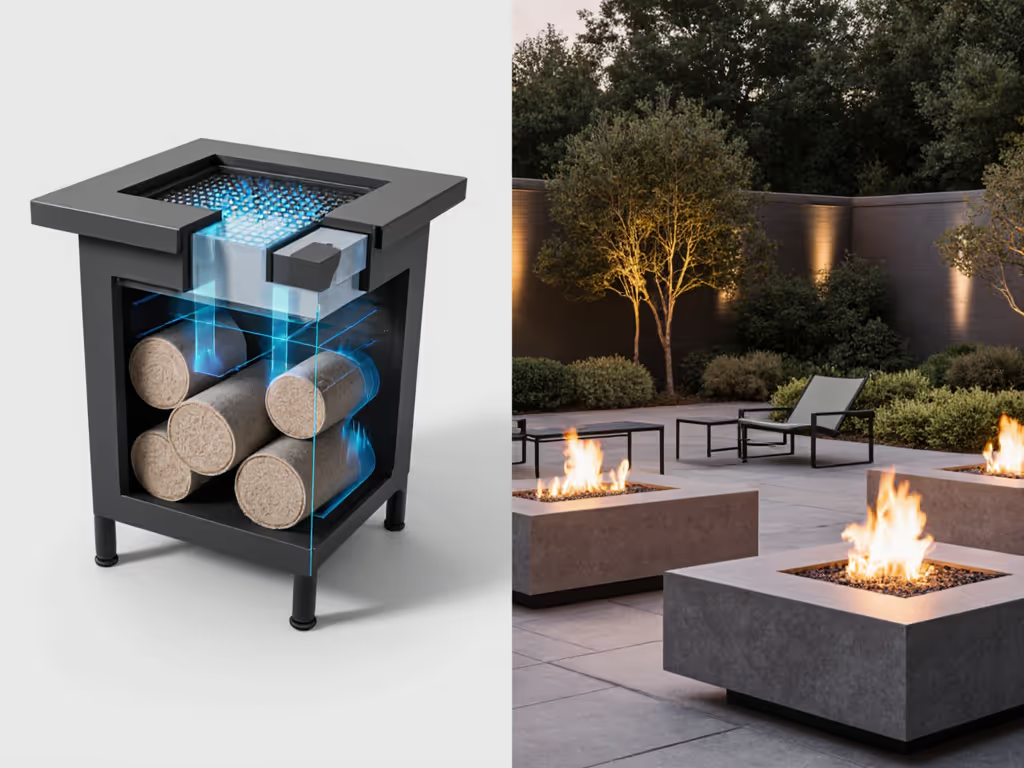
Remember my backyard experiment? When we lowered the flame and lifted the pit, conversations got easier. That's the goal here. Make cozy feel effortless by removing sensory interruptions, so the only thing clients notice is their own breath.
Wellness-Specific Safety & Compliance
Negotiating codes isn't bureaucratic hassle; it's ethical hosting. Commercial spaces face stricter rules than homes:
- Deck Safety: Composite decks melt at 175°F. Require verified surface temps <150°F (measured under load) with thermal protective bases. No "trust the manufacturer" claims, demand sensor logs.
- Air Quality Alerts: During regional PM2.5 spikes, meditation space fire pits must shut down before AQI hits 50. Smart units with ambient air sensors (like some Tiki Pellet models) auto-throttle airflow, critical for studios near wildfire zones.
- HOA/Public Space Rules: In shared courtyards, spark arrestors are non-negotiable. Verify NFPA 211 compliance; look for mesh screens with <1/8" apertures tested to ASTM E108.
One studio owner told me: "I use this checklist with our fire marshal before leasing new space." It's saved her from fines and client complaints. Your smokeless fire pit review must include these checkpoints, not just heat output.
Action Plan: Audit Your Space Today
Don't wait for a complaint. Run this 10-minute assessment:
- Smoke Test: On a breezy evening, light your pit. Walk the perimeter holding unscented incense. Note where smoke concentrates, especially near seating. If it lingers >5 seconds in guest zones, reposition or add a curved wind guard.
- Thermal Mapping: Use a $20 IR thermometer. Measure knee-height (18") and shoulder-height (42") temps at 3', 6', and 9' from the pit. Ideal wellness zones: 72-78°F at knees, 68-74°F at shoulders. Adjust pit height or flame intensity to hit this.
- Compliance Scan: Check local fire codes for commercial outdoor heaters. Many cities require 10' clearance from structures (not 5' like residential), and certificates of insurance naming your pit manufacturer. Review our fire pit regulations guide to avoid costly compliance mistakes.
This isn't paranoia. It's mindful hosting. When every therapeutic fire feature aligns with human needs, not manufacturer hype, you create spaces where discomfort dissolves before it begins.
Comfort is calibrated: distance, height, flame, and mindful hosting.
Wellness centers don't just host people; they hold space for vulnerability. Your fire feature should do the same: quiet, clean, and utterly unobtrusive. When clients forget they're being hosted, when they simply are, that's when healing deepens. Make cozy feel effortless by tuning the system, not the spectacle. Audit your space this week. Then light the fire, and let the quiet work begin.
Related Articles
Buying Guides & Top Picks
Round Fire Pits for Mild Climates: Low-Maintenance Winners
15th Mar•13 min read
Buying Guides & Top Picks
Fire Pits With USB Charging: Safety, Performance & Best Models
23rd Feb•15 min read