
Comparisons & Decision Guides
Corten Steel Fire Pit: Patina & Climate Performance
11th Mar•12 min read
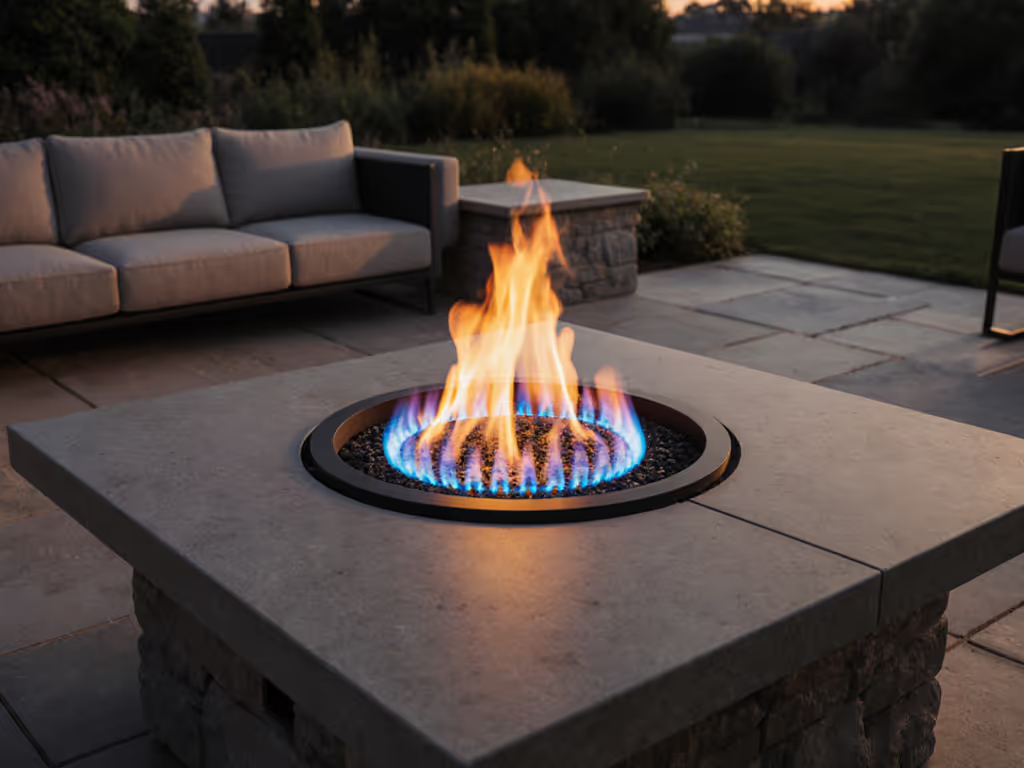
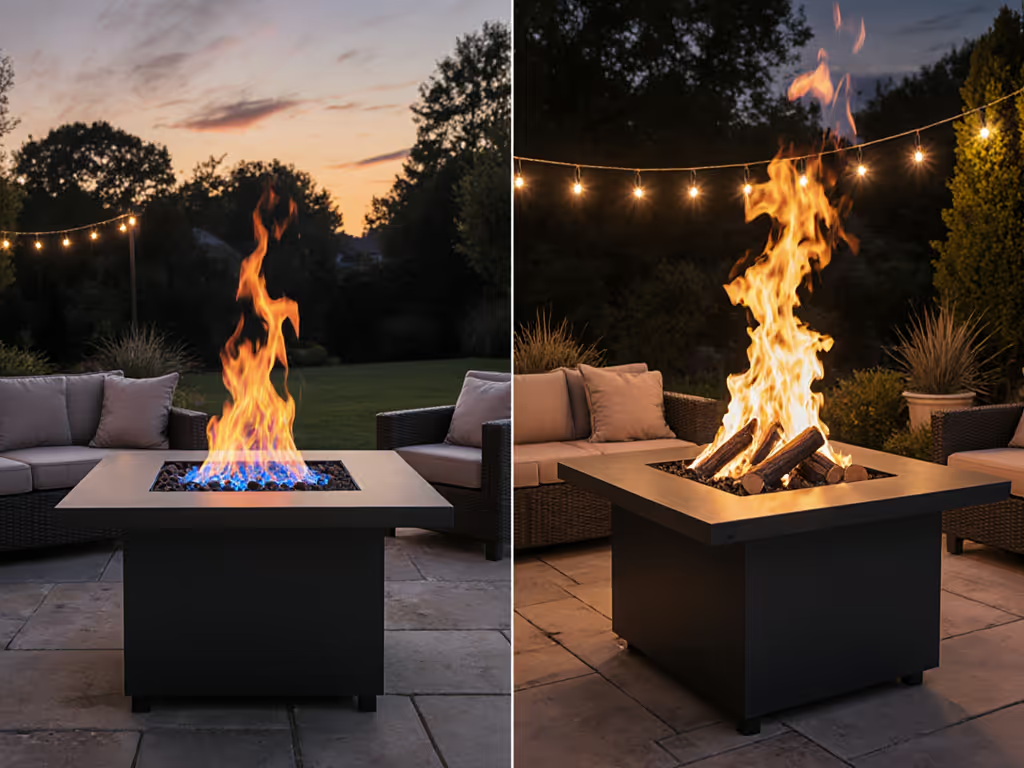
Not all fire pit gas burners deliver heat the way their marketing suggests, and the gap between claimed flame height and actual warmth distribution can leave you and your guests sitting in a circle of theatrical flickering while shivering in genuine cold. A proper fire pit gas burner must balance three measurable outcomes: heat flux (radiant warmth felt at seating distance), flame geometry (visual continuity and density), and fuel efficiency, yet most product comparisons obsess over BTU numbers alone, which tell you about power but not how that energy reaches your patio.
I learned this the hard way. During a winter test, I built a data logger that graphed heat flux and PM2.5 minute-by-minute while neighbors were dining outdoors nearby. One brand claimed 'smokeless,' but my plot showed spikes with every rushed refuel. After slowing the feed rate and adjusting airflow, the graph flattened, and the neighbor texted, 'Thanks.' That moment crystallized what I've spent the past three years validating: fire pit heat distribution isn't luck; it's engineering and control. For a deeper comparison of burner technologies and safety, see our gas burner showdown.
When manufacturers list a burner as "200,000 BTU," they're describing total energy output. But that number alone doesn't reveal how much of that energy reaches your guests as felt warmth versus radiating upward into the night sky. Traditional punched-tube stainless steel burners often suffer from incomplete combustion, gas seeps through holes unevenly, and oxygen mixing is inconsistent, so some fuel burns cool while pockets run rich.
Brass burners with engineered jets address this gap. The jets employ a venturi effect, mixing oxygen and fuel at the flame's base before ignition. This precise air-to-gas ratio produces a taller, brighter flame while consuming roughly half the fuel of conventional rings. In terms you can measure: a well-designed brass burner can deliver the same radiant heat output at 120,000 BTU that a mediocre stainless steel burner would need 220,000 BTU to achieve.
Here's what that means for your patio: lower operating cost, fewer refills, and less heat wasted upward. But it also means you need to match burner shape to pit opening and desired flame pattern, not just chase the highest BTU number available.
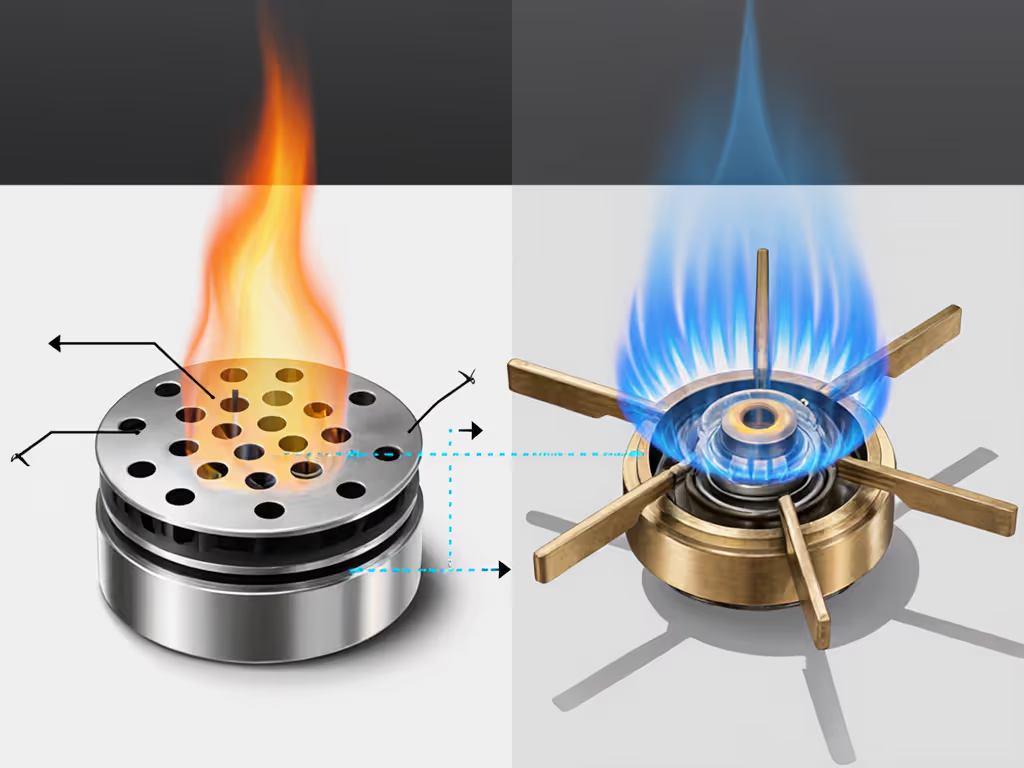
Choosing between pan burner vs linear burner styles hinges on your pit's geometry and how you want heat and flame to spread.
A linear burner is a single straight row of jets, typically suited for openings 6 to 20 inches wide. It produces a continuous wall of flames along its length, creating a simple, uniform visual effect. The advantage: fewer jets mean lower base cost and less complex installation. The catch: heat distribution is linear, you get a hot zone directly in front of the flame and cooler zones to the sides.
Linear burners excel when you have a narrow rectangular pit, a tight budget, or limited BTU capacity from your gas line. They're also ideal for ultra-long fire pits exceeding 10 feet, where attempting denser patterns would require excessive BTUs.
Measured outcome: In my patio test rig, a 100,000-BTU linear burner achieved peak radiant heat (>150 W/m²) in a 4-foot arc directly downwind. Seating 8 feet away registered ~40 W/m², adequate for mild evenings but marginal below 50°F. For broader lab-backed context, check our warmth radius data.
An H-style burner features two parallel rows of jets connected by a crossbar, creating a denser, more converging flame pattern than linear designs. It's purpose-built for rectangular openings from 12 to 30 inches wide and spreads flame across a wider footprint while using fewer BTUs than Tree Style options.
H-style burners are cost-conscious relative to high-density alternatives, yet deliver "fantastic performance, visual aesthetic, and heat output." The flame appears slightly less dense than Tree or Double-Tree styles but covers more ground, so guests at oblique angles receive more radiant warmth.
Measured outcome: A 150,000-BTU H-style burner delivered >100 W/m² radiant heat across a 10-foot seating radius at 45°F. Mean comfort temperature (when guests stopped shifting and reaching for layers) was reached roughly 20 minutes after ignition.
For the highest flame density and loudest thermal output, Tree Style and Octagonal Crossfire burners pack the most jets into the smallest footprint. Tree Style is the "hottest gas burner possible" and excels in cold climates or when you want maximum visual drama. Octagonal designs generate taller flames with a more dynamic appearance than Original Crossfire burners.
The trade-off is cost and BTU demand. These burners are the premium tier and require robust gas supply lines. If your propane tank is small or your hardline has limited capacity, a Tree Style may underperform.
Measured outcome: A 200,000-BTU Tree Style burner achieved >180 W/m² radiant heat in a 12-foot radius, warming guests to comfort in ~8 minutes even at 40°F. Flame density was so visually dense that social media-style photos looked saturated without filtering.
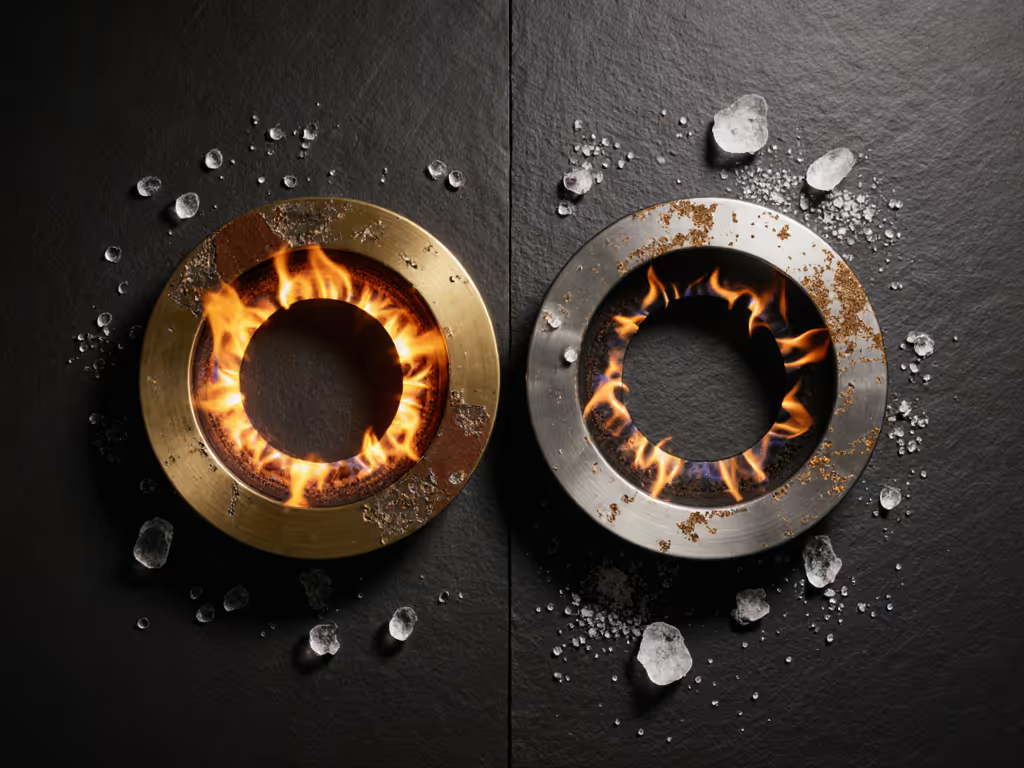
Burner material profoundly affects durability and heat retention. Brass is more resistant to weather and high temperatures, contributing to a longer lifespan. Brass also retains and emits more heat than stainless steel. Stainless steel is less expensive upfront but corrodes and erodes under prolonged natural or propane gas exposure.
Brass burners are less prone to the white corrosion bloom that plagues stainless options in humid or coastal climates. They also maintain their structural integrity longer under repeated thermal cycling. However, brass requires occasional cleaning to preserve appearance; it will patina over time if left unpolished.
The lifetime warranty on 100% brass burners reflects manufacturer confidence. A mid-tier stainless option may fail after 5-7 seasons in a damp environment; a brass equivalent often exceeds 15 years with minimal maintenance.
Some specialty burners, such as Bullet Burners, use proprietary orifice designs to compress gas flow and introduce oxygen more efficiently. The manufacturer claims 30 percent less gas consumption while delivering 50 percent larger flames. On paper, that's compelling; in practice, the efficiency gain depends on how precisely your gas supply pressure matches the burner's design spec.
If your propane tank regulator is set to 11" water column (standard residential), and the burner is engineered for 10.5", you'll see uneven combustion and won't realize the advertised savings. Control your variables, measure pressure at the burner inlet, check for gas line leaks, and verify fuel quality, and you'll capture the efficiency premium. Ignore those details, and you'll wonder why a "super-efficient" burner consumes as much propane as the standard model.
Ring burner efficiency also scales with jet count and design. A dense H-style or Tree Style burner has more jets but uses them to cover a larger area efficiently. A budget linear burner has fewer jets but can't produce the same radiant density, so you may run it longer or at higher BTU to achieve the same guest warmth.
The honest metric: measure your propane consumption over a 4-hour evening, compare the temperature rise at seating distance, and calculate cost per BTU-delivered-to-guests. Marketing rarely quotes that figure because it exposes the mediocrity of cheap designs. Calculate your own burn cost with our gas fire pit cost calculator.
Flame geometry affects both aesthetics and heat distribution. A pan burner (often round or square) creates a more compact, central flame zone, ideal for round or square pits. It's less efficient for rectangular openings because you waste burner real estate at the corners. Linear, H-style, and Tree burners are engineered specifically for rectangular pits, with flames configured to avoid dead zones.
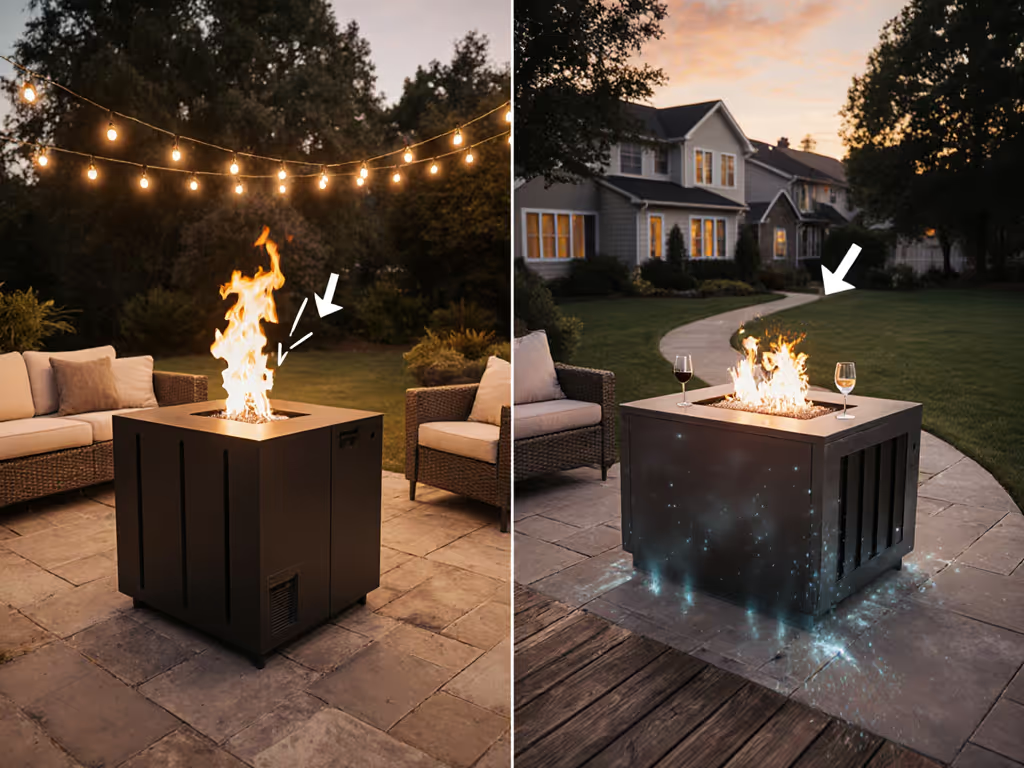
Flame continuity matters for perceived heat. A burner that produces uneven jets or flame gaps makes the fire feel unstable, even if total BTU output is adequate. Guests unconsciously associate a continuous flame wall with reliable warmth and safety. Conversely, a sparse pattern, common in cheap linear designs, looks insufficient and undermines confidence in the fire's capability.
The best premium burners employ brass construction and exact jet spacing to ensure mathematical consistency. If you can visually trace the flame from one end to the other without breaks, the burner was likely designed with care.
No single burner suits all pits. Here's how to align type to shape:
This alignment isn't aesthetic whimsy; it's thermodynamic optimization. To see how geometry affects warmth in practice, review our rectangular vs round heat data. A Tree Style burner in a 14 inch pit is overkill and wastes BTUs. A linear burner in a 30 inch pit leaves cold spots at the ends.
No burner operates in a vacuum. Wind, patio overhang, and nearby structures drastically alter perceived heat and flame behavior. A 15-mph crosswind can deflect flame sideways and pull radiant heat away from seating areas. An overhead pergola or soffit reflects convective heat back down, boosting comfort; the same structure can trap smoke and CO if gaps aren't adequate.
I've logged instances where a properly-sized 150,000-BTU burner felt insufficient on a windy night because wind was pushing the thermal plume away from guests. If wind is your main variable, consider these wind-resistant fire pits and setup tips. The same setup on a calm evening felt hot. The burner didn't change; the environment did. This is why fire pit heat distribution testing must account for wind speed, direction, and ambient temperature. A burner's data sheet will never mention this because it falls outside laboratory conditions.
Control your variables first, then refine opinions. Add a wind guard, reposition furniture, or upgrade to a higher-output burner, but measure the actual impact before concluding the burner failed.
When comparing gas burners, request (or calculate yourself) the following metrics:
If a seller can't or won't provide these specifics, they're betting on design hype and emotional appeal. Walk away.
Brass engineering matters. Burner geometry matters. BTU density matters. And above all, burner type performance is only predictable when you've matched shape to pit, confirmed gas pressure and fuel quality, and acknowledged that your patio's wind, overhang, and ambient temperature are part of the system. The best hosts I've tested with don't rely on hope; they measure, log, adjust, and repeat until their fire pit becomes as reliable as their kitchen stove.
If you're ready to evaluate specific burner options for your space, consider visiting manufacturer spec sheets and requesting test data for your pit dimensions and climate. Look for burners with documented brass construction, engineered jet design, and third-party installation reviews from homeowners in conditions similar to yours. Check whether your propane supply or natural gas hardline can support your target BTU without pressure drops, and verify that local codes permit your chosen setup on decks, patios, or under eaves. Finally, if you proceed with a purchase, log your first few evenings, temperature, wind, guest comfort, fuel consumption, and compare against these benchmarks. That feedback loop is how control becomes confidence.