

Historic Fire Pit Maintenance: Preservation vs Modern Upkeep
By Kenji Sato • 11th Feb
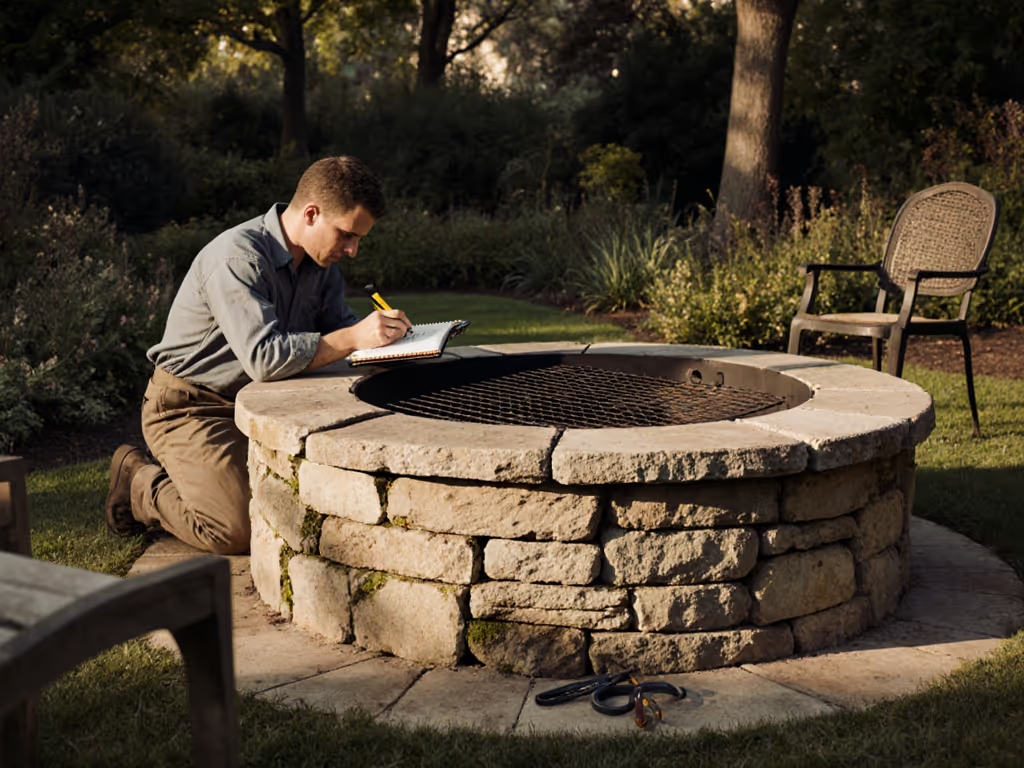
For homeowners with historic properties or vintage fire features, historic fire pit maintenance presents a unique challenge: balancing authenticity with contemporary safety standards. Unlike modern installations governed by IRC Section G105 and NFPA 211, historic fire pits require specialized approaches that honor original craftsmanship while addressing current risk profiles. For a plain-English overview of placement rules and HOA/municipal constraints, see our fire pit regulations guide. As a detail-focused researcher who cross-checks manuals, HOA rules, and material limits, I've developed checklist-first methodologies that prevent incidents before they occur.
Safe nights start with clearances, lids, and shared expectations. This principle guides my analysis of preservation versus modern maintenance approaches for fire features spanning from early 20th century cast iron to mid-century stone installations. Let's examine the critical differences through a code-literate, risk-aware lens.
Historic Fire Pit FAQs: Preservation vs. Modern Upkeep
What defines the fundamental difference between preservation care and modern maintenance?
Preservation fire pit care prioritizes material integrity and historical accuracy, while modern traditional fire feature upkeep emphasizes safety compliance and functional performance. The preservation approach treats the fire pit as a cultural artifact requiring conservation protocols similar to those used by museum professionals for metal objects in heritage collections (as referenced in Canada's Conservation Institute guidelines).
Consider this risk matrix:
| Criteria | Preservation Approach | Modern Maintenance Approach |
|---|---|---|
| Primary Goal | Material longevity and historical accuracy | Safe, functional operation meeting current codes |
| Ash Management | Minimal removal to preserve patina | Complete removal after each use to prevent corrosion |
| Surface Treatment | Non-invasive cleaning only | Regular high-temperature sealing |
| Structural Repairs | Match original materials and methods | Modern fire-rated materials and reinforcements |
| Usage Frequency | Limited, ceremonial only | Regular recreational use |
This table reveals why preservation-grade fire pits often require "display only" status in modern residential settings. When working with homeowners who want functional historic fire features, I always recommend documenting the original condition before any intervention (this creates a baseline for future restoration needs).
How do material considerations differ for historic versus modern fire features?
The physics of thermal expansion doesn't change with time, but modern materials science provides better understanding of failure points. For vintage fire pit restoration, copper elements require special attention as they naturally develop a greenish patina, a process copper preservation experts consider desirable. Yet for functional fire pits, this patina indicates ongoing oxidation that could compromise structural integrity. If your vintage unit includes copper, follow our copper maintenance guide to balance patina and protection.
Stone fire features from the early-mid 20th century often used mortars incompatible with modern freeze-thaw cycles. Western Interlock's research confirms that traditional lime mortars degrade faster than modern refractory alternatives when exposed to repeated thermal cycling. My standard recommendation: when repairing historic stone features, use a 70/30 blend of original mortar composition and modern fire-rated mortar to balance authenticity with durability.
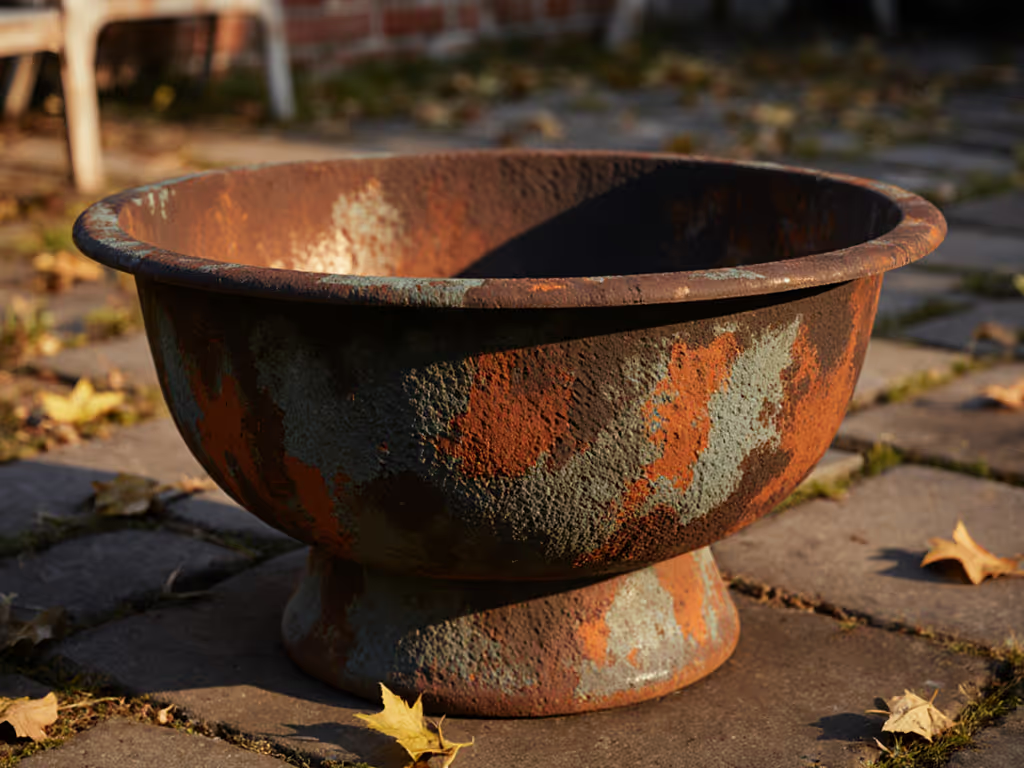
For cast iron components, the preservation approach strictly prohibits sandblasting (which removes protective patina), while modern maintenance often requires abrasive cleaning to remove rust before applying high-temperature paint. For heritage-focused owners comparing metals, review our cast iron vs steel guide. This creates a critical decision point: if the fire pit will be used regularly, structural integrity must take precedence over absolute historical accuracy.
What clearance differences exist between historic and modern fire pit installations?
This is where safety protocols become non-negotiable. Historic fire pits were often installed with minimal clearances, sometimes directly against wooden structures based on outdated understanding of radiant heat transfer. Modern codes require minimum 36-inch clearance to combustibles for wood-burning features, but many vintage installations fall short of this standard. Learn current placement clearances in our 10-foot distance rule.
My if/then advisory: If your historic fire pit doesn't meet current clearance requirements, then either:
- Install a non-combustible heat shield meeting ASTM E119 standards, or
- Relocate the fire feature completely, or
- Convert to decorative-only status
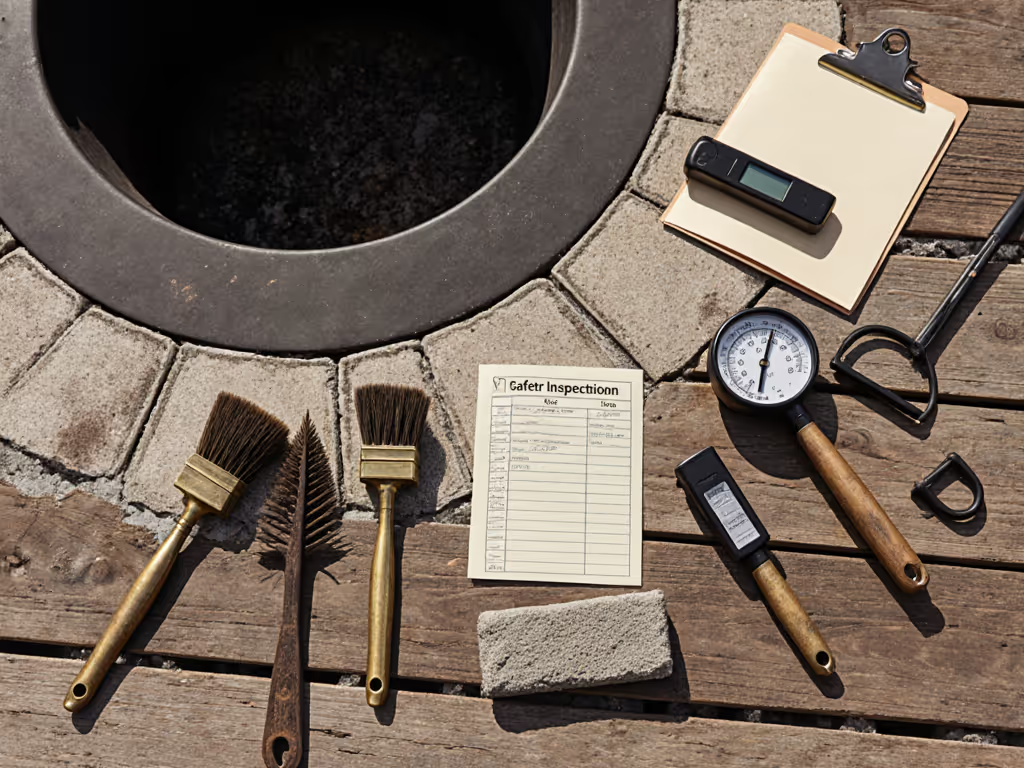
When measuring clearance zones, I use infrared thermometers to identify hot spots (just as I did when marking safe zones with chalk for that condo board years ago). Thermal measurements always inform my clearance recommendations, not just dimensional requirements.
When in doubt, increase distance. This simple rule has prevented countless incidents in historically constrained spaces.
How should ash management differ for preservation versus functional use?
Historic preservation experts recognize that ash buildup creates a protective barrier against oxidation, a valuable consideration for display-only features. However, fire pit conservation for functional units requires complete ash removal after each use to prevent corrosive buildup, especially when moisture is present.
My checklist-first approach for functional vintage fire pits includes:
- Allow complete cooling (minimum 24 hours)
- Remove ash with non-sparking metal tools
- Inspect for heat stress patterns in materials
- Document any new cracks or deterioration
- Clean interior surfaces with pH-neutral stone cleaner
- Reapply high-temperature sealer every 2-3 years
The Chimney Solutions research confirms that leaving ash in place accelerates deterioration of masonry and metal components when exposed to moisture, making regular cleaning essential for any fire pit intended for continued use. Pair your routine with our seasonal care calendar to prevent weather-driven deterioration.
What documentation practices ensure successful fire pit conservation?
A proper maintenance log proves as valuable as the physical structure itself. For preservation projects, I document:
- Original material composition
- Pre-restoration condition
- Environmental exposure factors
- Previous maintenance interventions
- Thermal performance metrics
For functional units, my logs track:
- Date and duration of each use
- Fuel type and moisture content
- Weather conditions during use
- Observed temperature gradients
- Maintenance performed
- Any anomalies observed
This ledger approach (which I developed after seeing multiple historic fire pits fail due to undocumented interventions) creates a comprehensive protection plan that ensures your fire feature ages gracefully while maintaining structural integrity.
Practical Implementation Framework
Risk-Based Decision Matrix for Historic Fire Pit Owners
Consider these factors when determining your maintenance approach:
Preservation Recommended When:
- The fire pit is structurally unsound for active use
- Historical significance outweighs functional needs
- You can accept "display only" status
- Clearances cannot be brought up to code
Modern Maintenance Recommended When:
- You plan regular use for gatherings
- Structural integrity can be verified
- Clearances can meet code requirements
- Historical significance is secondary to functionality
Preventive Maintenance Schedule Comparison
| Task | Historic Preservation Approach | Modern Maintenance Approach |
|---|---|---|
| Ash Removal | Minimize removal; preserve patina | Complete removal after each use |
| Structural Inspection | Annual visual check | Quarterly inspection plus post-use checks |
| Cleaning | pH-neutral solutions only | Monthly deep cleaning with stone-specific cleaners |
| Sealing | Never apply sealants | High-temp sealant every 2-3 years |
| Crack Repair | Match original materials exactly | Modern fire-rated mortar compounds |
Conclusion: Balancing Heritage and Safety
The tension between historic integrity and modern safety requirements requires careful navigation. For homeowners considering vintage fire pit restoration, I recommend consulting with both preservation specialists and certified fireplace technicians to develop a hybrid approach that respects history while meeting contemporary safety standards.
Remember that preservation-grade fire features often cannot function safely by today's standards (this isn't a value judgment but a materials science reality). When working with historic properties, my conservative stance has prevented numerous incidents that would have compromised both safety and historical value.
For those committed to functional historic fire pits, implement these critical safeguards:
- Document current condition thoroughly before any intervention
- Verify structural integrity with a professional assessment
- Address clearance issues through engineering solutions rather than exceptions
- Maintain detailed usage and maintenance logs
- Prioritize preventive maintenance over reactive repairs
Further Exploration
To deepen your understanding of historic fire feature maintenance:
- Consult the Masonry Heater Association's Historic Preservation Guidelines for material-specific restoration protocols
- Review ASTM standards for refractory materials applicable to historic restoration
- Attend workshops offered by historic preservation societies on traditional masonry techniques
- Connect with local building departments about heritage exemption processes (where available)
- Study the Canada Conservation Institute's guidelines for metal object preservation
When evaluating whether to preserve or modernize your historic fire feature, always begin with thermal measurements and clearance verification. The most authentic fire pit means little if it compromises safety, a lesson reinforced time and again through measured observations rather than theoretical assessments. Your future self will appreciate the documentation that turns today's maintenance decisions into tomorrow's preservation knowledge.
Related Articles

Comparisons & Decision Guides
Corten Steel Fire Pit: Patina & Climate Performance
11th Mar•12 min read
Comparisons & Decision Guides
Smokeless Fire Pit Designs: Vertical vs Horizontal Airflow
15th Feb•11 min read