
Smokeless Fire Pit Designs: Vertical vs Horizontal Airflow
By Amina Diallo • 15th Feb
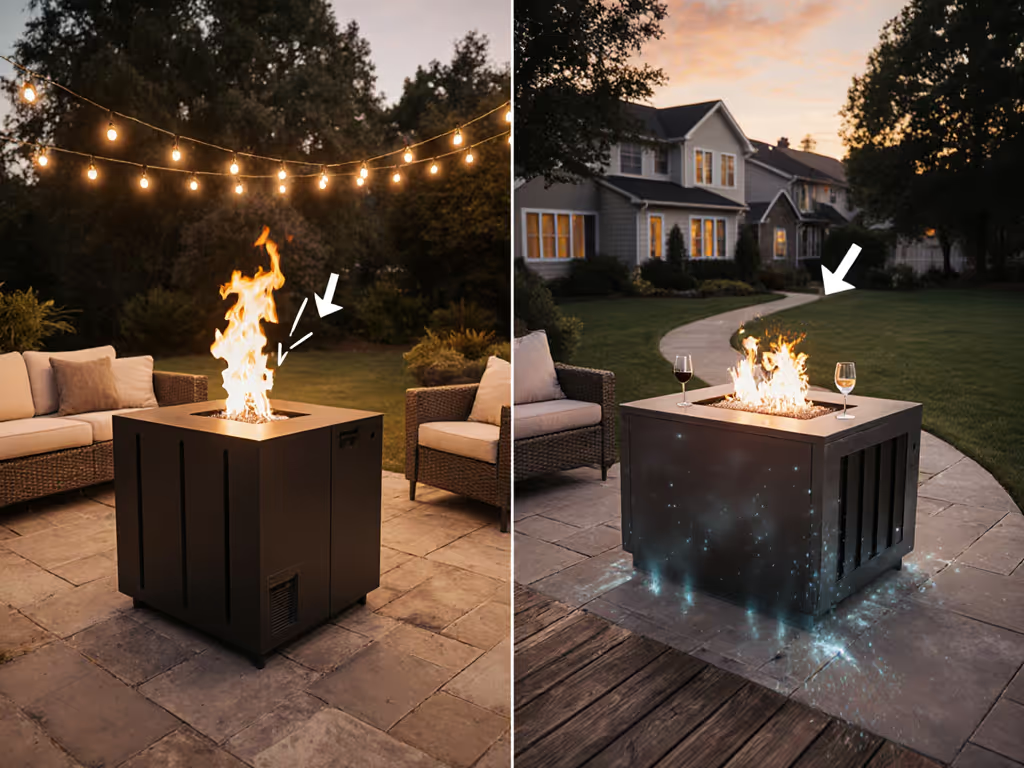
When you're hosting on a small patio or apartment deck, the difference between a neighbor's tolerant nod and an awkward conversation often comes down to one thing: how much smoke drifts across the property line. Vertical vs horizontal airflow designs fundamentally change how a smokeless fire pit manages combustion, and understanding these geometries matters more than brand loyalty if you live close to others.
The term "smokeless" doesn't mean no smoke. It means dramatically reduced particulate output through engineered airflow. Not all airflow strategies are equal. Some designs pull air vertically through the combustion chamber, while others move it horizontally across the fire bed. Each approach trades off heat distribution, burn speed, ash accumulation, and the critical metric your neighbors care about: drift and lingering odor.
FAQ Deep Dive: Vertical vs Horizontal Airflow in Smokeless Designs
How Do Vertical Airflow Designs Work?
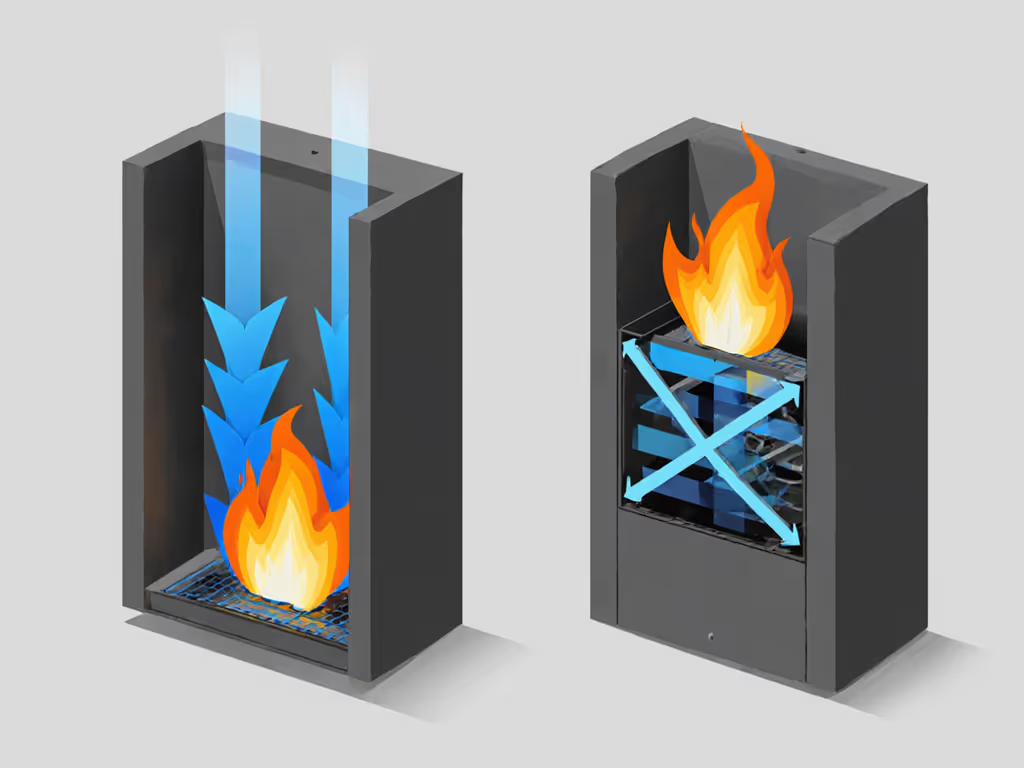
Vertical airflow systems, like those used by Solo Stove, rely on a double-walled cylinder with intake holes positioned around the base on the outside of the inner wall and exhaust holes around the top on the inside. As the fire heats the air inside, it rises naturally. This convective pull draws cool air up through the gap between the walls, then down through the intake holes at the base, feeding the fire with fresh oxygen.
The second combustion event happens at the top: hot gases and smoke from the primary burn are forced through the upper exhaust holes, where they meet a secondary layer of oxygen-rich air, reigniting before they escape. This stacking of combustion stages is what cuts smoke so dramatically.
Why it matters for your neighborhood: Vertical designs tend to produce a taller, more concentrated plume. If wind is light, the plume rises and disperses faster, which is good. If you're in a courtyard or surrounded by tall buildings, that rising smoke can recirculate, creating the exact drift problem you were trying to avoid. The good news? When vertical designs work, they produce less total particulate per log burned because combustion is so complete.
How Do Horizontal Airflow Designs Work?
Horizontal airflow systems, pioneered by Breeo with their X-series, use a raised structure (like an X-shaped bridge) sitting on the pit floor. Air enters the base and flows across the fire bed horizontally, rather than rising vertically. This means oxygen is delivered directly to the burning wood rather than being pulled upward as a consequence of heat.
The horizontal geometry also pushes flames and hot gases in a more lateral direction, which changes the radiation pattern. Instead of a plume, you get a wider, flatter burn envelope.
Why it matters for your neighborhood: Horizontal designs spread smoke lower and wider, which can seem counterintuitive. But in dense, close-quarters settings, this can reduce the stack effect that sends smoke up into second-story windows and neighboring air conditioners. The tradeoff: logs burn faster because airflow is more aggressive, so you go through fuel quicker.
What Does the Data Say About Smoke Management Efficiency?
The key measurement is secondary combustion completeness — how much of the wood's volatile gases are burned away before leaving the pit. Independent lab tests have found that both vertical and horizontal designs can achieve near-complete combustion, with nearly zero visible smoke after the initial light-up phase.
However, PM2.5 and odor behavior differ meaningfully:
- Vertical systems concentrate particulates in a thinner plume, making them seem "more smokeless" visually, but in a crosswind they can drift further as a coherent stream
- Horizontal systems disperse particulates over a wider footprint, reducing concentration, but can carry smell across a larger area
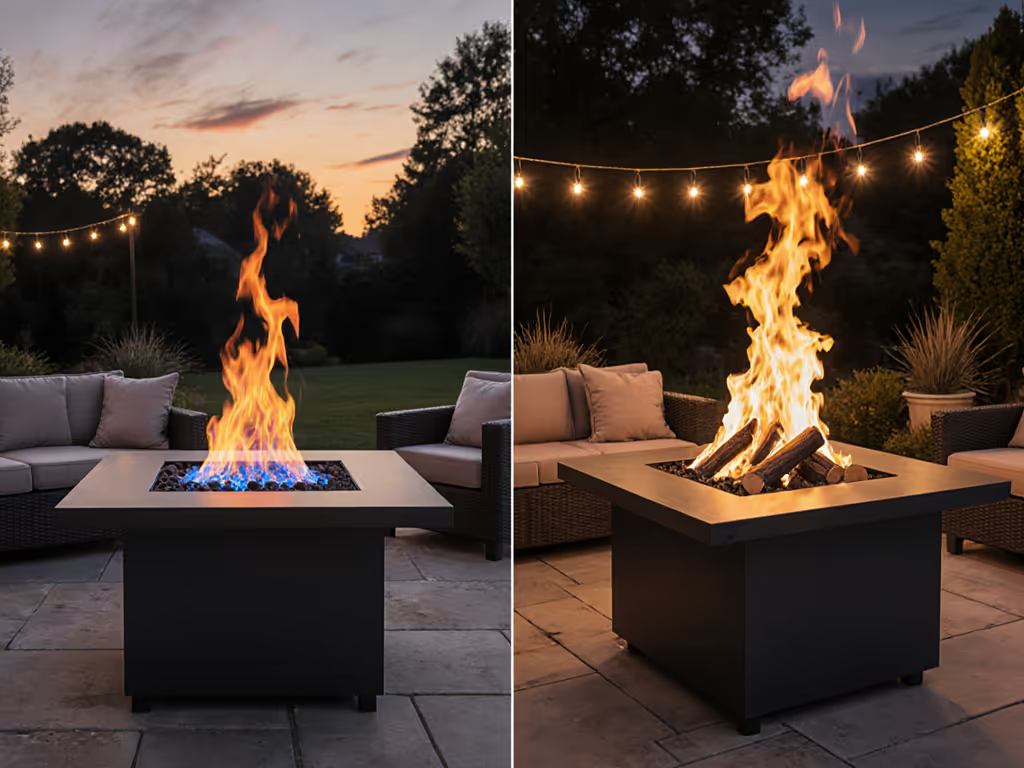
The real-world implication: neither design is universally superior for neighbor protection. Your microclimate — wind direction, building height, time of day, humidity — is equally important. A square fire pit or large rectangular model with horizontal airflow, placed perpendicular to prevailing winds, will often outperform a tall vertical model in congested neighborhoods.
Which Airflow Design Burns Wood More Completely?
Both geometries achieve high combustion efficiency, but the timing differs. Vertical designs establish secondary combustion more gradually. You may see wisps for the first 5-10 minutes, then near-zero smoke. Horizontal designs reach steady-state burn almost immediately but continue consuming logs faster due to the aggressive air supply.
The practical trade-off:
- Vertical = slower, longer-duration burn with less fuel consumed per unit time
- Horizontal = faster, hotter burn with more frequent refueling
If you're aiming to minimize ash and cleanup, the horizontal design's complete combustion is actually preferable, with less residue and less soot on nearby surfaces. This is particularly relevant if you have composite decking or light-colored siding nearby.
How Do Temperature and Heat Output Differ Between Designs?
Both vertical and horizontal smokeless fire pit designs produce substantial radiant heat, typically matching or exceeding a traditional open fire. For measured warmth radius and intensity gradients, see our heat pattern comparison. But the distribution pattern varies.
Vertical designs (like Solo Stove Yukon) radiate heat in a cone shape, with more intensity radiating downward at the rim and less heat reaching your feet if you're seated 2+ feet away on a cool evening.
Horizontal designs (like Breeo X-series) project heat in a flatter, wider pattern. Flames extend laterally out of the pit more frequently, creating a comfortable warm zone in a squat, inverted-cone shape. This is often preferred in tight urban settings where seating is close and multiple people cluster around one pit.
For a large smokeless fire pit, horizontal airflow typically performs better in close-quarters hosting because heat reaches more faces simultaneously, reducing the need to rotate seating.
What About Ash and Residue Cleanup?
Vertical systems like Solo Stove and Blue Sky feature lift-out ash trays at the base. Ashes fall through, and you remove and empty the tray when cool. This is tidy but requires a second step.
Horizontal systems like Breeo also include removable ash management, but the more aggressive combustion means less total ash accumulates. The upside: fewer cleanings overall. The downside: logs need refueling more often.
For neighbor harmony, less ash is genuinely better. It means fewer particles settling on their railings, cushions, and laundry lines. If you're choosing between designs and live in a shared wall or close-proximity setting, the faster, more complete burn of horizontal geometry, and thus less residue, is worth factoring in.
How Does Fuel Choice Interact With Airflow Design?
Most vertical vs horizontal fire features are optimized for cord wood, but some models — notably Flame Genie and Tiki-brand models — accept wood pellets or even bioethanol fuels.
Pellet-fueled horizontal designs (like Flame Genie Inferno) virtually eliminate smoke entirely because the fuel is manufactured to a low-moisture, high-density standard. They also produce the least ash. If you live in a dense urban setting or have guests with severe asthma, pellet fuel plus horizontal airflow is the lowest-emissions combo.
Propane/gas designs (like Ninja Fireside360) eliminate wood smoke altogether, offering true on-demand startup and shutdown without the waiting game. They're quieter, produce zero particulates, and operate at virtually any time without violating burn bans. Trade-off: less ambiance and no crackling sound.
Cord wood remains the most common fuel. Drier wood burns more completely in both designs, so fuel prep is as important as design choice.
How Do These Designs Handle Wind and Microclimate Challenges?
Wind is the variable that humbles even premium smokeless pits. A vertical design's concentrated plume can be pushed horizontally by just a 5 mph breeze, creating exactly the drift problem you were trying to solve.
Horizontal designs tolerate wind better because the smoke is already dispersed laterally, so a crosswind doesn't create a tight smoke stream toward a neighbor's window. If wind is a constant in your area, compare our wind-tested fire pits for setups that hold steady in breezy conditions.
Practical mitigation:
- Place your pit perpendicular to prevailing evening wind, not aligned with it
- For vertical designs, use a wind guard on the downwind side to deflect rising smoke
- In a courtyard, position a horizontal design with the low-smoke side facing your main seating area and common boundaries
- Check your local wind rose (historical wind pattern data) before siting. This transforms your setup from guesswork to science
{{GENERIC_IMAGE(wind rose diagram prevailing wind direction outdoor space planning)}}
Cleaner burns travel farther than apologies, and so does smoke. If your lot backs onto a neighbor's bedroom window, the geometry of your pit, not just the brand, predicts whether they'll tolerate it.
What About Fire Pit Geometry - Does Square vs Round Matter?
Most smokeless pits are cylindrical, but some designs, like Blue Sky, feature a twelve-sided or faceted rim. A square fire pit or rectangular model with horizontal airflow offers an advantage in small urban spaces: it packs more efficiently against a patio edge, and the sharp edges can be oriented to channel smoke away from building facades and entry doors.
Round (vertical) designs are more visually traditional but radiate heat more evenly in all directions. For engineering-backed shape trade-offs, see our rectangular vs round performance data. That is useful if you're hosting a circle of guests but less ideal if you need to direct smoke away from a specific boundary.
Clean combustion geometry is partly about the airflow system and partly about strategic placement. A rectangular horizontal-airflow pit placed thoughtfully often beats a premium cylindrical vertical pit placed carelessly.
Which Design Is Right for My Situation?
Choose vertical airflow if:
- You have good wind flow or are in an elevated location where smoke disperses quickly
- You prefer a traditional, compact aesthetic
- You want logs to last longer (slower burn)
- You're not worried about concentrated plumes in certain wind directions
Choose horizontal airflow if:
- You live in a dense neighborhood with close-proximity neighbors
- Your space is a courtyard, small patio, or apartment balcony (where wind is unpredictable)
- You prioritize minimizing ash and odor spread over log duration
- Heat distribution to multiple seated guests matters more than concentrated radiance
- You prefer a large smokeless fire pit that handles aggressive feeding without visible smoke
Choose propane/gas (often horizontal geometry) if:
- You live under strict burn bans or HOA rules prohibiting cord wood
- Neighbors have diagnosed asthma or severe allergies
- You want true on-demand control and instant shutdown
- Odor and particle drift are non-negotiable concerns
Choose pellet-fueled horizontal if:
- You want the lowest measured PM2.5 and odor footprint
- You're willing to store bags of pellets and manage a small hopper
- You live in a climate where wood moisture is unpredictable
How Do I Know a Design Is Actually Delivering Low Smoke?
Don't rely on marketing claims alone. Look for:
- Published lab test data with visual smoke comparisons and time-to-steady-state measurements
- Verified secondary combustion gaps - the distance between the inner and outer walls should be at least 1-2 inches; thinner gaps underperform
- Airflow geometry details - how many intake/exhaust holes, their size and positioning, and whether the system is sealed or has leaks
- User feedback from dense neighborhoods - if urban owners report compliance, the design likely works in close quarters
A design that promises "smokeless" but lacks third-party testing is speculation, not reliability. Your neighbors don't care about marketing; they care about measurable results.
Further Exploration: Next Steps for Your Setup
Choosing between vertical and horizontal airflow is the first decision, but your full hosting success depends on three additional factors:
Siting & Clearance: Before buying, measure your space and confirm clearance to siding, railings, and overhangs per local fire codes (typically 6-15 feet). Get exact placement rules in our fire pit safety distance guide. Horizontal designs sometimes require slightly more lateral clearance because flames extend outward. Vertical designs need clearance overhead.
Fuel Prep & Storage: If you choose cord wood, source kiln-dried wood (moisture below 20%) at least a month before use, and store it covered and off the ground. Wet wood negates the benefit of any smokeless design and creates the smoke drift you were trying to eliminate.
Accessory Essentials: Wind guards, spark screens, and deck protectors are not luxuries in close quarters. They're compliance and neighbor-harmony tools. Cleaner by design, not by accident, means investing in the ecosystem that ensures your pit performs as advertised every time.
Your choice of airflow design signals a commitment to your community. Whether you opt for the steady, rising discipline of vertical airflow or the dispersed, aggressive efficiency of horizontal flow, the goal remains the same: cozy conversations and zero complaints the morning after. That's hospitality at scale.
Related Articles

Comparisons & Decision Guides
Corten Steel Fire Pit: Patina & Climate Performance
11th Mar•12 min read
Comparisons & Decision Guides
Historic Fire Pit Maintenance: Preservation vs Modern Upkeep
11th Feb•8 min read