
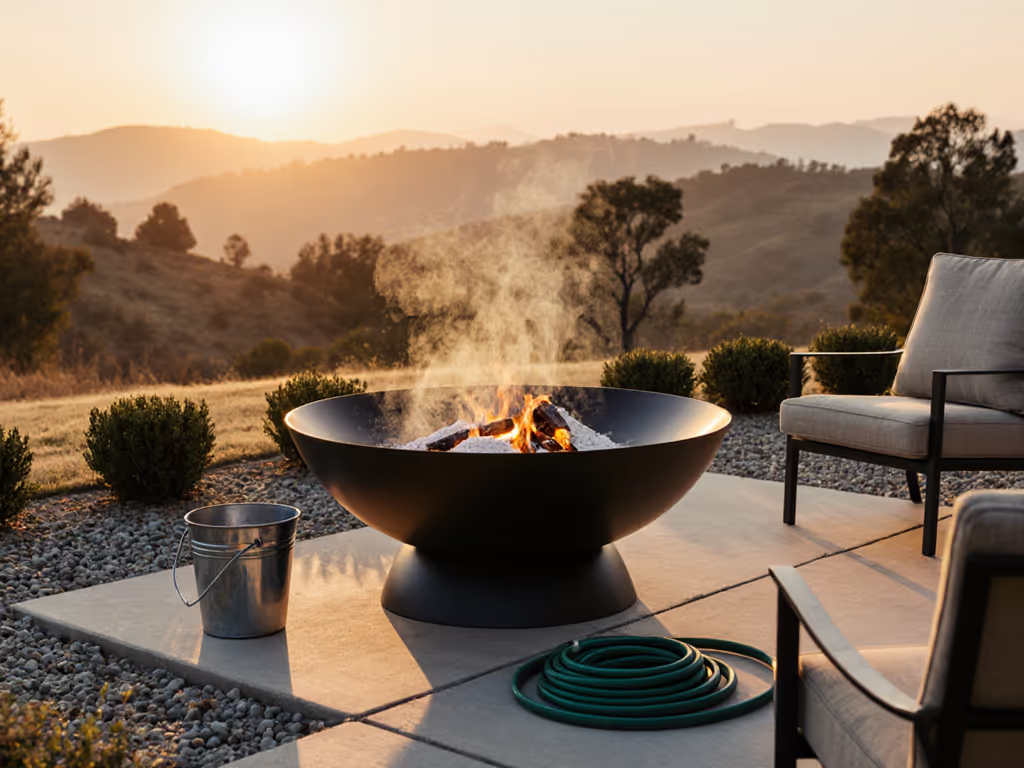
2025 Biomass Heater Tax Credit: Claim 30% Savings
By Priya Raman • 26th Nov

If you're searching for a fire pit tax credit 2025, let's clear the air immediately: outdoor fire pits don't qualify for federal incentives. But here's what does matter for your outdoor comfort, wood burning firepit enthusiasts take note. The IRS Biomass Tax Credit (officially the Energy Efficient Home Improvement Credit) covers indoor biomass heaters only, yet its core principle transforms how all of us host: cleaner combustion means fewer complaints, gentler smoke, and conversations that flow as smoothly as your fire. Because true comfort isn't just warmth, it's calibrated distance, height, flame, and mindful hosting. Let's untangle the rules so you can make cozy feel effortless.
Why Your Outdoor Fire Pit Doesn't Qualify (And What Actually Does)
It's a common mix-up. Federal incentives target primary heating appliances that meet strict efficiency standards, think indoor wood stoves, pellet stoves, or biomass boilers that heat your entire home. An outdoor wood burning firepit? Classified as a decorative accessory, not a heating system. No federal fire pit incentives exist. But this misunderstanding hides a golden opportunity: the science behind the credit reveals how to make any fire (indoor or out) more neighbor-friendly.
The Real Magic: 75% Thermal Efficiency
The credit requires 75% thermal efficiency (measured via EPA testing). This isn't just a number, it's the key to eco-friendly heating tax benefits. Higher efficiency means:
- Less smoke drift toward neighbors' laundry lines or bedroom windows
- Lower particulate matter (PM2.5), easing allergy/asthma concerns for guests
- Stable, radiant heat that doesn't vanish when wind gusts hit, no more huddling over flames
I've seen how minor height adjustments and airflow tweaks transform guest comfort. When heat distributes evenly, jackets come off, and dogs stop circling for cooler spots.
For indoor systems, this efficiency directly qualifies you for 30% back on purchase/installation up to $2,000. But outdoors? Applying these principles lets you host without smoke complaints, even if your fire pit isn't tax-eligible.
What Does Qualify for the 2025 Biomass Tax Credit
Before December 31, 2025, you can claim 30% (up to $2,000) on:
- Wood stove tax credit-eligible units: EPA-certified wood stoves or inserts
- Pellet stoves meeting 75%+ efficiency
- Biomass boilers (for whole-home heating)
Critical 2025 Requirements You Can't Skip
- The QM Number Game: Post-2024, you'll need the manufacturer's 4-digit Qualified Manufacturer (QM) code (e.g., Hearth & Home Technologies' "HTHI"). Find it on the stove's label or EPA listing, not your receipt.
- Own Your Home (Or Rent... Kind Of): Primary residences and second homes qualify. Renters? Only if you install the unit (with landlord permission) and claim it as your primary residence. Apartment balconies? Sorry, no dice. Before setting up any outdoor flame, review your local rules in our fire pit regulations guide.
- Timing Is Tight: Purchase and install by December 31, 2025. Claim via IRS Form 5695 when filing 2025 taxes.

Why This Matters for Your Backyard Hosting
You might think: "This is indoor stuff, I'm just lighting a backyard fire pit." But the credit's science solves your top pain points:
- Smoke Drift Anxiety: Efficient combustion = less unburned particulate. For outdoor pits, use bone-dry wood (under 20% moisture) and avoid overloading, mimicking EPA-certified burn patterns. If smoke sensitivity is a concern, see our verified smokeless fire pits comparison.
- Neighbor Complaints: A well-tuned fire produces near-zero visible smoke after startup. Gentle directives: Position pits downwind of seating and 10+ feet from property lines.
- Wind Woes: Like my backyard movie night, I mapped thermal comfort at knees vs. shoulders. Adding a low-profile wind guard (not blocking airflow!) stabilizes flames without trapping smoke. For breezy patios, consider models from our best fire pits for windy areas testing.
Your Stepwise Tweaks for Cleaner Outdoor Fires
Even without tax credits, adopt the quiet-host ethos:
- Prep Fuel Right: Store wood/pellets under cover; test moisture with a $20 meter. Damp fuel = 10x more smoke.
- Mind the Microclimate: Place pits in natural wind shadows (e.g., behind a low wall). If smoke drifts, lower the flame, not raise it.
- Embrace Sensory Cues: If you smell smoke while sitting, the fire's too smoky. Add oxygen (stir logs) or reduce fuel.
- Safety First: Use a deck protector mat rated for 1,000°F+ on composites. Verified surface temps stay safe below 176°F with proper clearance.
Actionable Next Steps: Claim Savings and Host Smarter
- Talk to Your Installer: Ensure they document efficiency ratings and QM codes on your invoice, critical for Form 5695.
- For Outdoor Fire Pits: Apply indoor efficiency principles. Prioritize units with secondary burn chambers (marketed as "low-emission") that mimic EPA standards for cleaner burns.
- Deadline Countdown: Schedule installations by November 30, 2025. December brings holiday delays and potential supply shortages.
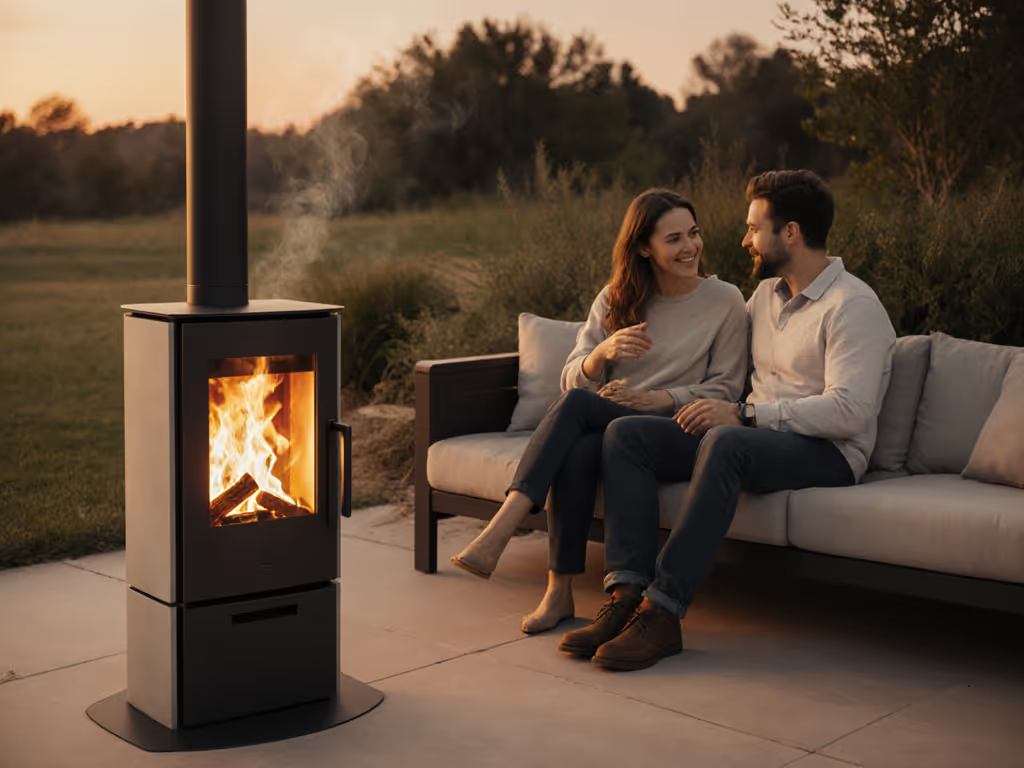
Final Thought: Comfort Is a System
The biomass tax credit isn't just about saving $600 on a $2,000 stove. It's proof that when you tune the system, distance, height, flame, and hosting, everything feels effortless. Fewer complaints. Warmer conversations. Less cleanup. Whether you're claiming federal fire pit incentives (spoiler: you're not) or optimizing your patio fire pit, remember: true comfort is calibrated. Measure your wood moisture. Map your wind patterns. Adjust the flame height. To optimize warmth for your seating radius, use our fire pit heat patterns guide. Do this, and you'll host the kind of evenings where jackets stay off, neighbors peek over the fence asking, "How's your fire so clean?", and the dog finally settles down.
Make cozy feel effortless: Claim your credit before December 31, but first, host tonight like a thermal comfort pro. Your guests will stay longer.
Related Articles
Safety & Regulations
Clinical Fire Therapy: Evidence-Based Protocols for Therapists
6th Jan•6 min read