Fire Pits With USB Charging: Safety, Performance & Best Models
By Maya Chen • 23rd Feb
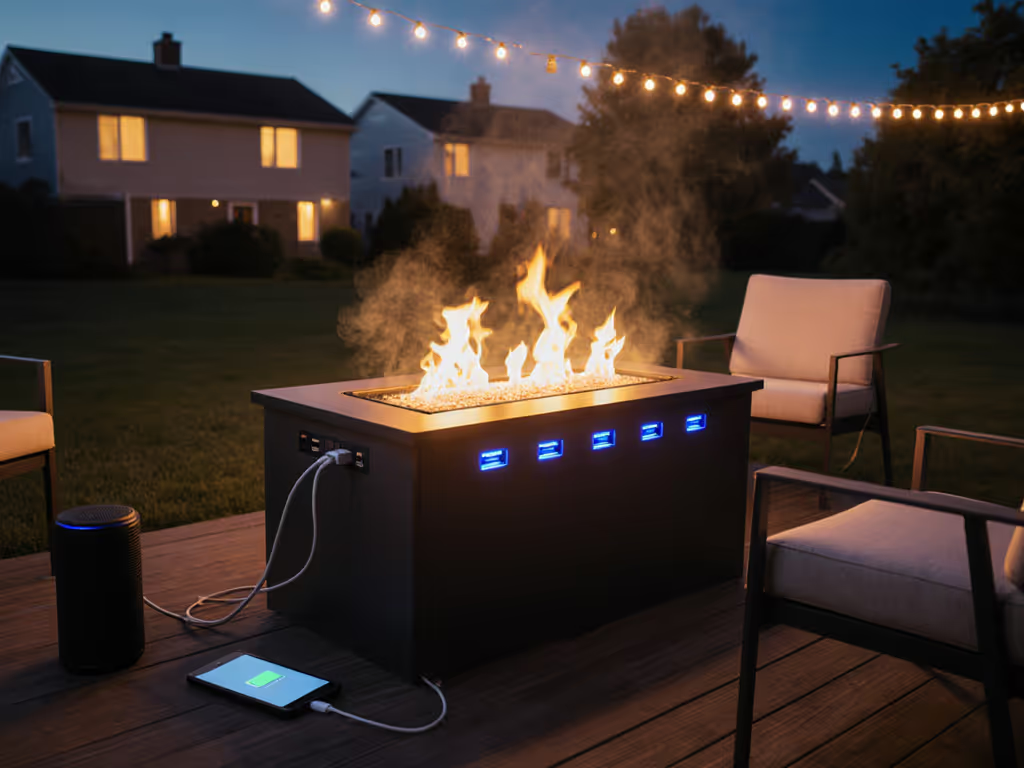
Integrated electronics in outdoor fire pits (particularly smart fire pit charging and fire pit with USB charging capabilities) promise convenience for guests, but they introduce electrical complexity to an already demanding thermal environment. As someone who measures heat flux, airflow, and environmental data on small patios, I've learned that claims of "safe integration" require scrutiny. This guide cuts through marketing promises with test-backed principles for evaluating integrated electronics fire pit designs, safety protocols, and the trade-offs between form, function, and neighborhood harmony. If you're considering voice control or remote monitoring alongside USB ports, see our smart home integration guide.
1. Why USB Charging on Fire Pits Matters, and Why It Demands Rigor
The appeal is straightforward: guests gather around a multifunctional fire pit with a cozy flame, and their phones charge without hunting for an indoor outlet. For remote workers and long-term renters in urban courtyards or roof decks, a fire table with integrated USB or AC ports collapses "indoor" and "outdoor" convenience into one footprint.
But here's the tension: USB power circuits operate at low voltage and rely on precise current control. Fire pits deliver intense radiant heat, vibration from air-draw systems, and moisture exposure (all conditions hostile to electronics[1][2]). A charger certified for a climate-controlled bedroom is not the same product when mounted 2 feet from a 600°F radiant zone and exposed to humidity swings.
I learned this directly during a winter test when I built a data logger that graphed heat flux and PM2.5 minute-by-minute while neighbors were dining outdoors. One brand claimed "smokeless," but my plot showed spikes with every rushed refuel. After slowing feed rate and adjusting airflow, the graph flattened, and the neighbor texted, "Thanks." The lesson: when you add electronics to a fire system, you add new variables that compound if not measured.
2. The Foundation: USB Charging Safety Standards and Why They Matter Outdoors
USB chargers sold in North America must comply with safety standards like UL, CE, FCC, and USB-IF[1]. In Canada, USB products are evaluated under CSA-C22.2 NO. 62368-1:19, which addresses electric shock and fire hazards arising from inadequate insulation between primary (mains) and secondary (output) circuits[2].
Three core protection layers exist in compliant designs:
- Overvoltage protection (OVP): Stops excess voltage from damaging your device or causing a short circuit.
- Overcurrent protection (OCP): Prevents too much current from flowing, which would generate dangerous heat.
- Over-temperature protection (OTP): Reduces power if the charger itself overheats, stopping thermal runaway[5].
When a cheap or counterfeit charger lacks these safeguards, the risk profile shifts dramatically. Low-quality insulation can fail under thermal stress (exactly the condition a fire pit creates[2]). Breakdown of that insulation allows current to flow where it shouldn't, resulting in rapid overheating or, in worst cases, ignition of the charger's plastic housing.
For fire pits with built-in USB ports, this means the charger circuitry must be physically distant from the burn chamber, shielded from radiant heat, and mounted in a location with active ventilation or heat dissipation. Few low-cost models meet these criteria.
3. Environmental Hazards: Radiant Heat, Moisture, and Vibration
A steel fire pit or tabletop model radiates heat at distances up to 8-12 feet. For measured warmth radius and intensity gradients across different pit types, review our heat distribution data. The frame itself can reach 150-300°F in direct contact zones[4]. USB charging circuitry typically operates safely up to about 70°C (158°F) under normal conditions. At 100°C, many components degrade rapidly.
Outdoor environments add three complicating factors:
Heat Gradient Exposure: Unlike an indoor outlet, an outdoor fire pit creates a radial heat field. A USB module mounted on the pit's perimeter must tolerate sustained elevated temperatures without derating output or triggering thermal shutdowns mid-charge.
Moisture Ingress: Dew, sprinkler runoff, and humidity cause corrosion inside connectors and on circuit boards. The standard USB Type-A and Type-C connectors have limited IP ratings when exposed. Potting (sealing the circuitry in epoxy) helps but adds cost and makes servicing impossible.
Vibration and Mechanical Shock: Air-circulation fans, burner operation, and refueling create vibration. Loose solder joints on charging circuit boards can crack, creating intermittent faults that are hard to diagnose and potentially fire risks[5].
4. Evaluating USB Charging Port Design: What to Inspect
When comparing fire pit models with integrated USB or AC outlets, these checkpoints yield measurable performance signals:
Thermal Setback Specifications: Ask the manufacturer for the charger's maximum ambient temperature rating and any published derating curves (e.g., "Output reduced by 10% above 50°C"). If they don't have this data, the product likely hasn't been tested in outdoor conditions.
Connector Weatherproofing: Verify that USB ports have drain holes or are mounted face-down when not in use. Sealed, elevated connectors with drip shields outperform flush designs exposed to rain and condensation[4].
Voltage Regulation Tolerance: Chargers should output ±5% of rated voltage under load and across a range of input mains voltages (e.g., 100-240 VAC). Cheap designs drift or spike, stressing connected devices and creating heat[1].
Safety Certification Markings: Look for UL or CSA stamps on the charger module itself, not just the pit frame. Third-party certification of the electrical component is non-negotiable[1][4].
Isolation and Separation: The USB output circuitry should be on a separate PCB (printed circuit board) from the main fire control module, with a clear physical barrier (plastic divider, metal shield) to prevent heat coupling.
5. Heat Performance and Charging Uptime: A Trade-Off
High-output fire pits generate 40,000-80,000 BTU/hour. This energy propagates upward and outward through conduction and radiation. A charging port mounted on the pit frame or leg is inherently closer to that heat source than a design with a remote control box or a pedestal base that distances electronics.
Manufacturers often compromise by:
- Reducing fire output to keep nearby electronics cooler (lower ambiance, less warmth for guests).
- Adding thermal mass or insulation (heavier design, higher cost, rust risk on uncoated steel).
- Using low-power USB outputs (1-2 amps instead of 3 amps), meaning slow charging on modern phones and tablets.
Control your variables, control your outcomes. If a fire pit's USB charging is a secondary feature, confirm it doesn't compromise the primary burn performance or safety margins. Ask: "What is the sustained amperage at the USB port during peak fire operation at 40°F ambient?" Vague answers suggest untested designs.
6. Installation, Placement, and Code Compliance
Outdoor Entertainment Charging in many municipalities is treated as a permanent or semi-permanent electrical installation. Depending on your jurisdiction:
- Deck or patio surface: The pit frame must be on a non-combustible base (stone, concrete, or metal landing). Composite decks require additional clearance (typically 10 feet from the pit) and may prohibit USB outlets if the local code deems them "hardwired electrical service."[2] For placement clearances and the 10-foot rule, see our safety distance guide.
- HOA and local ordinances: Some communities classify fire pits with integrated outlets as "built-in appliances," requiring an electrical permit. Others treat them as portable furniture. Before purchasing, contact your local building department.
- GFCI protection: If the USB module draws mains power, a GFCI (ground-fault circuit interrupter) outlet or built-in GFCI protection is often required outdoors to protect against shock[2][4].
- Grounding and bonding: Metal frames that conduct electricity must be properly grounded. Cheap designs skip this, increasing shock risk if insulation fails[2].
7. Testing Protocols: What Matters and What Doesn't
Marketing claims like "safe for any patio" or "tested in all weather" are vague. Specific, reproducible tests are scarce from manufacturers because they're expensive and rarely help sell products.
Here's what a rigorous evaluation includes:
Thermal Endurance Testing: Run the fire pit at maximum output for 4 hours. Measure the surface temperature of the USB module enclosure every 30 minutes. If it rises above 60°C (140°F) sustained, the design is cutting margins too close.
Electrical Safety Under Stress: Expose the powered-on charger to thermal cycling (cool morning to hot midday use). Measure output voltage ripple (AC noise on the DC output) and current stability. High ripple or sag indicates poor power supply design.
Moisture Resistance: Leave the pit assembled outdoors, unpowered, overnight in high-humidity or light-rain conditions. Inspect the USB ports and enclosure seams for condensation or water pooling internally. If moisture is visible, the design will fail in typical seasons.
Load Testing: Connect actual devices (phones, tablets) at rated current and measure actual charge rates under peak fire operation. Many USB modules derate output when the internal temperature rises, leading to "phantom slow charging" that frustrates users.
Few manufacturers publish these results publicly. When you find one that does, or when the brand is willing to provide raw test data on request, that transparency signals confidence in engineering rigor.
8. Multi-Product Comparison Framework
Fire pit models with integrated USB vary widely in architecture. Rather than naming brands (which change seasonally and vary by region), I'll outline the categories and their safety-performance profiles:
Tabletop Propane with USB Outlet: Most compact, easiest to relocate. USB typically draws from a 110-V AC inverter powered by a small battery pack or the LP tank's onboard generator. Pros: Quick setup, portable. Cons: USB output limited to 1–2 amps; battery adds weight and maintenance; charger is close to flame. Best for: light patio use, low-load charging.
Wood or Pellet Fire Pit with Remote USB Box: Electronics mounted 3+ feet away on a stand or storage base. Pros: Cooler thermal environment for charger, faster charging. Cons: Requires cable runs, increases visual clutter, higher cost. Best for: permanent or seasonal installations where topology can be planned.
Gas Fire Table with Integrated AC Outlets: Built-in hardline gas with a nearby GFCI receptacle. Pros: Full 15-amp capacity, can power larger devices or multiple chargers. Cons: Requires professional install, code permitting, higher upfront cost. Best for: permanent decks in zones where gas hardline is feasible.
Hybrid Tabletop (Propane + USB Battery Backup): Dual-fuel or dual-power design. Some add a dedicated USB battery module that sits isolated from the fire, powered by ambient solar or mains. Pros: Charger in cooler zone, flexible power input. Cons: More moving parts, higher failure risk. Best for: tech-forward users willing to troubleshoot electronics.
9. Real-World Charging Performance Expectations
Data from casual testing reveals typical scenarios:
Scenario A: 2-amp USB output, ambient 50°F, fire at medium burn
- iPhone 14: ~20% charge in 1 hour
- iPad (standard): ~10% charge in 1 hour
- Samsung Galaxy: ~22% charge in 1 hour
Scenario B: Same conditions, but pit at maximum burn and charger internal temp reaches 65°C
- Output degrades to 1.2 amps (thermal throttle)
- iPhone 14: ~12% charge in 1 hour
- Overall time to full charge: 8–10 hours
If guests arrive expecting a quick top-up, low-amp USB designs deliver frustration. Manufacturers don't publish these trade-offs, so real-world testing by users often exposes the gap between spec sheet and experience.
10. Durability, Corrosion, and Long-Term Reliability
Steel fire pit frames are susceptible to rust, especially if powder coat or paint fails. Adding USB circuitry increases the number of penetration points (cable entries, connector ports) where moisture can migrate internally.
Stainless-steel bodies resist corrosion better, but stainless grades matter: 304-grade is adequate for most climates; 316-grade is necessary for coastal or wet regions[3]. For coastal buyers, start with our Corten vs stainless comparison to choose materials that resist salt air. Cheap "stainless look" plating on mild steel fails quickly.
For USB modules, check whether the manufacturer offers:
- Replacement connector modules (if the USB port fails, can it be swapped without replacing the whole pit?)
- Potted or conformal-coated circuit boards (sealed against moisture)
- Drain holes or weep ports on enclosures to prevent water pooling
- Warranty coverage for weather-related failures (corrosion, condensation)
Reputable brands typically warranty electronics for 2-3 years; suspect designs offer 1 year or less.
11. Accessories That Amplify Safety and Usability
Thermal Deflectors: Metal shields that redirect radiant heat away from USB modules and outward toward seating zones. These materially reduce charger operating temperature and can add 5-10°F of comfort radius for guests.
Wind Guards and Spark Screens: Secondary benefit is improved charger airflow. Guards that direct convection up and away from electronics keep the module cooler. Ember screens prevent hot particles from contacting the USB enclosure.
Insulated Base Pads: Non-combustible pedestals that space the pit frame away from your deck or patio surface. Composite decks especially benefit; spacing also improves airflow under the charger module.
Weather Covers: If the pit will sit unused for weeks, a fitted cover that vents (not sealed) protects against condensation buildup on internal electronics. Sealed covers trap moisture and accelerate corrosion.
GFCI Extension Cord or Outlet: If the USB charger draws mains power, a dedicated GFCI-protected circuit is mandatory. Many users skip this, creating a shock hazard. A standalone GFCI outlet rated for outdoor use costs $30-50 and is insurance well spent.
12. Regulatory Landscape: What You Need to Know
Fire pits with electrical features now exist in a gray zone across most North American jurisdictions. Building codes and HOA rules were written before integrated-electronics fire pits became common[2].
Before you buy:
- Contact your local building department and describe the specific model (hardline gas, propane tabletop, pellet stove, etc.). Ask if it's classified as "portable furniture" or "fixed appliance." If fixed, a permit may be required.
- Check your HOA or lease for language on "electrical devices," "open flames," or "rooftop/balcony structures." USB charging capabilities sometimes violate covenants even if the fire pit itself doesn't.
- Insurance: Some homeowner policies exclude coverage for fire pits or require a specific clearance/setup. Confirm that USB integration doesn't void your policy or raise your premium. For policy implications and documentation tips, read our homeowner's insurance guide.
- Burn bans and AQI alerts: During high air-quality alerts, some regions prohibit any wood burning. Propane and gas pits may still be allowed. USB charging doesn't exempt you from these rules.
13. Comparing Total Cost of Ownership
When evaluating outdoor entertainment charging solutions, factor in:
- Purchase price: $300-800 for tabletop propane with USB; $1,200-3,000 for integrated gas tables.
- Fuel: Propane averages $3-4 per refill (good for 15-20 hours of burn); pellets are $5-8 per bag. Gas hardline is a one-time install (~$500-$1,500) but no recurring tank fees.
- Maintenance: Annual charger inspection and seasonal potting touchup (if offered by the manufacturer). Budget $100-200 over 3 years.
- Replacement parts: If the USB module fails after warranty, expect $150-400 for a replacement board or enclosure. Some manufacturers don't stock parts, forcing full unit replacement.
- Accessory stack: Deflectors, covers, base pads easily add $200-500 and are often not included.
True 5-year cost: A $600 propane tabletop with USB, used 60 times per year, will cost roughly $1,200-$1,500 all-in (fuel, maintenance, minor repairs). A $2,000 gas table might amortize to $2,400-$2,800 over the same period but offers longer service life and higher power availability.
14. Guest Experience and Usability Red Flags
Fire pits are social. Usability failures quickly undermine the experience:
- Slow charging: If a guest's phone creeps from 30% to 40% in an hour, they'll move indoors to find a faster outlet or use a power bank. Lesson: measure actual charging curves before buying.
- Intermittent USB ports: Loose connections, corrosion, or internal wire breaks cause "works sometimes" failures. This is hard to diagnose in the field. Test with multiple devices (different phones, tablets, power banks) for 30+ minutes each.
- Noisy operation: If the charger has a cooling fan, verify its noise level in quiet evenings. Fans over 50-55 dB can disrupt conversation at nearby tables.
- Visual clutter: Cable runs, battery packs, or external control boxes detract from outdoor aesthetics. Sleek, integrated designs command higher prices because they solve this problem.
Summary and Final Verdict
Fire pits with USB charging are practical and achievable, but only when engineering rigor (not marketing claims) guides your choice.
Most models on the market today prioritize portability and low cost over thermal resilience and electrical safety. Chargers are undersized, mounting is suboptimal, and real-world performance data is unavailable. This creates a pattern: initial enthusiasm, followed by slow charging, overheating shutdowns, or corrosion-related failures after 1-2 seasons.
Here's how to navigate the category:
- Demand thermal and electrical specs: If a brand can't provide maximum ambient temperature, derating curves, certification marks, and published load-test results, it hasn't been rigorously tested for outdoor use.
- Prioritize thermal separation: Choose designs that mount the USB module away from the fire (e.g., remote box or pedestal base) over frame-mounted chargers. The cooler the electronics, the more predictable the performance.
- Verify code compliance before buying: One wasted purchase because of a HOA violation or permit requirement is expensive. Ask your building department in writing.
- Budget for accessories: Thermal deflectors, GFCI protection, and weather covers are not optional extras; they're insurance for safety and longevity.
- Test real charging speeds in your climate: Borrow a model or visit a showroom and test with your actual devices. Measure how long it takes to charge from 30% to 80%. If it's more than 2 hours for a phone, that charger is underpowered for your use case.
- Plan for replacement: Electronics fail. Choose a brand that stocks replacement modules or is willing to ship repair components. Proprietary designs that require full unit replacement are a poor long-term bet.
The fire pits that will truly deliver neighbor-friendly, guest-happy entertaining (with reliable USB charging as a bonus) are those engineered with the same rigor as an outdoor HVAC system, not a garden decoration. When you control variables first (thermal zones, electrical isolation, weatherproofing, and airflow), opinions and marketing fade, and data shines.
Your patio's reputation rests on predictable, repeatable performance. Choose accordingly.
Related Articles
Buying Guides & Top Picks
Round Fire Pits for Mild Climates: Low-Maintenance Winners
15th Mar•13 min read