Yoga Fire Pit Safety: Mindful Setups for Clean, Calm Practice
By Amina Diallo • 25th May
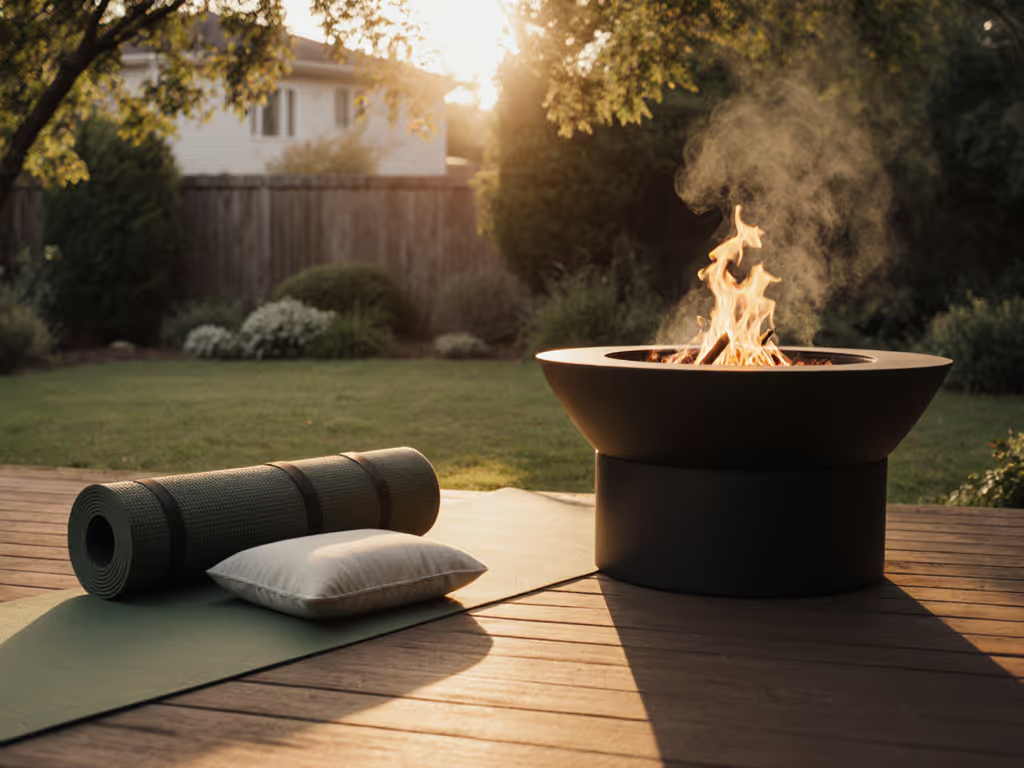
When we talk about yoga fire pit safety and meditation fire pit protocols, we are really talking about one thing: keeping lungs, nerves, and neighbors relaxed at the same time. A flame that supports mindfulness is quiet, contained, low-emission, and predictable (not just pretty).
Most problems people experience with fire during yoga or meditation aren't random. They follow patterns you can measure: wind traps smoke in courtyards, damp wood spikes PM2.5, and tight clearances amplify heat and risk. Once you see the cause -> effect chain, you can design a setup that's cleaner by design, not by accident.
Cleaner burns travel farther than apologies and air purifiers.
The Problem: Beautiful Ritual, Messy Physics
Even a modest fire pit can clash with a mindful practice in three main ways.
1. Confusing safety rules in tight spaces
Urban and suburban yogis are often working with small patios, rooftop decks, or townhouse courtyards under pergolas or eaves. You're trying to reconcile:
- Building codes and HOA rules
- Burn bans and regional AQI alerts
- Manufacturer clearances (which are often written for open backyards)
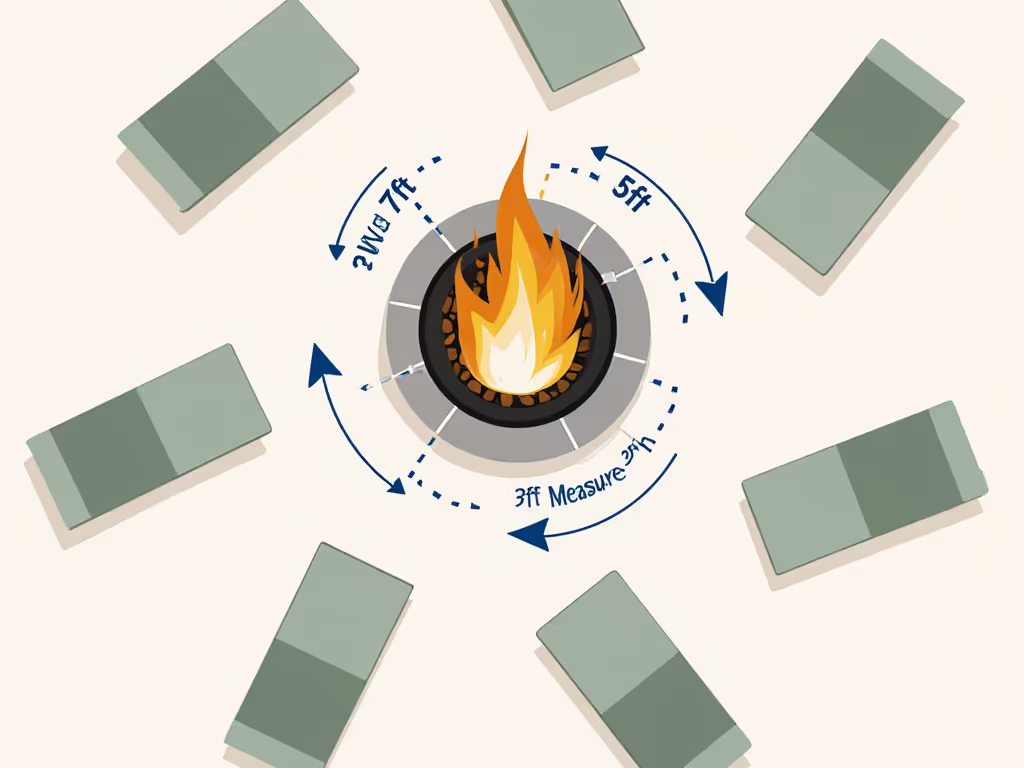
General industry guidance for gas fire features is to keep at least 5 to 10 feet of horizontal clearance from structures, 7 feet of vertical clearance to any ceiling or cover, and seating about 3 feet back from the outer edge of the unit. For detailed placement diagrams and regional exceptions, see our 10-foot distance guide. You also want cross-ventilation in covered patios to prevent heat and fume buildup. Those numbers alone disqualify a lot of tiny balconies from live flame.
2. Air that doesn't match the intention
Yoga and meditation emphasize slow, deep breathing. That amplifies exposure to whatever is in the air:
- Wood smoke raises fine particulate (PM2.5), which is strongly associated with respiratory irritation (especially for people with asthma or allergies).
- Even "smokeless" pits will smoke with damp wood, overloaded fireboxes, or gusty crosswinds.
- Odors cling to hair, mats, and cushions, turning a calming ritual into next-day cleanup.
For sensitive guests, the question isn't "Is it visible smoke?" but "What's the dose over the whole session?" If smoke sensitivity is a concern, our lab-tested smokeless fire pits for sensitive users compare real PM2.5 reductions.
3. Microclimates that recycle smoke
Courtyards, L-shaped houses, balcony railings, and privacy fences create recirculation zones. Smoke that would dissipate in an open yard can loop back at face height where you're practicing pranayama. Wind shifts mid-session can move you from clean air to a concentrated plume in seconds.
In my own tests with low-cost sensors, I've watched PM2.5 at a courtyard property line jump several-fold when a small fire in the wrong corner meets the wrong wind. The lesson is simple: placement is as important as fuel.
4. Safety anxiety that breaks concentration
If you are quietly tracking: "Is that beam getting too hot? Are embers hitting the synthetic turf? Will the HOA complain?" you are not in savasana. For many, the biggest barrier isn't technical risk; it's the unease of not knowing where the line between safe and sketchy really is.
Agitate: How Things Go Wrong in Real Life
Let's connect those pain points to concrete scenarios so you can recognize them before they happen.
- You light a compact wood pit for a twilight restorative session. A light breeze shifts, and smoke starts curling under the pergola, catching in the rafters. Within minutes, eyes sting and a guest with mild asthma starts coughing.
- On a composite deck, a fire bowl sits on a thin rug that was marketed as "heat resistant." After 45 minutes of gentle vinyasa nearby, you notice a faint plastic odor and find the underside of the rug is browning.
- In a walled courtyard, the pit sits near the windward corner. Smoke rises, hits the lee wall, and drops right where mats are laid out. You smell it in indoor laundry overnight.
- You're mid-meditation on a "smokeless" pit. Someone adds a couple of damp logs, the secondary burn collapses, and there's a sudden, dense smoke burst just as everyone takes a deep inhale.
None of these are disasters. They are exactly the kinds of repeatable patterns you can design away with better mindfulness fire pit setup and therapeutic fire pit positioning.
The Solution: Meditation Fire Pit Protocols That Really Work
Here is a practical, evidence-forward sequence you can use as your meditation fire pit protocols playbook. Think of it as a pre-flight checklist for both safety and air quality.
The most neighbor-friendly fire pits follow clear protocols, not vibes.
Step 1: Decide if live flame is appropriate today
Before you even think about fuel:
-
Check local rules and conditions
- Are there burn bans or "no solid fuel" alerts active?
- Is the regional AQI already elevated from wildfire smoke or pollution? If yes, skip live flame and use LED candles, warm string lights, or a tabletop ethanol feature instead. Not sure what applies to you? Start with our fire pit regulations guide to avoid costly mistakes.
-
Match intensity to practice
- For restorative or meditation, choose the smallest stable flame that delivers ambiance, not heat.
- For active flows in cool weather, consider a gas fire table or radiant heater upwind of your mats instead of a large wood fire.
Step 2: Choose the cleanest viable technology
For mindful, close-quarters practice, a rough emissions ladder looks like this (cleaner toward the top):
- No flame (LED, infrared heaters, salt lamps)
- Hard-plumbed or propane gas fire tables with properly adjusted burners
- Alcohol/ethanol burners (outdoors, with good ventilation)
- Pellet or "smokeless" wood pits run carefully
- Open wood fires with inconsistent fuel and airflow
None are zero-impact, but some are easier to manage. For yoga and meditation, prioritize:
- Stable flame height that won't suddenly roar
- Fine control over output (valves or multiple burner settings)
- Minimal crackle or popping (noise matters for meditation)
If you choose wood, keep the session short, the load small, and the wood extremely dry. Avoid softwoods and any treated or painted lumber.
Step 3: Design therapeutic positioning
Now place the fire in relation to people, structures, and wind.
-
Respect clearances Use the 5 to 10 ft horizontal and 7 ft vertical guidance as a hard minimum for gas features, and equal or greater distances for wood. Keep chairs and mats at least 3 ft from the outer edge of the unit. Place the pit on a non-combustible base (pavers, stone, or a rated deck pad) rather than directly on wood or composite decking.
-
Work with the wind, not against it
- Place the fire downwind of any seating or mat area so smoke and heat move away from breathing zones.
- In narrow courtyards, test with incense or a stick of sage first; watch where the plume goes and avoid corners where air stalls.
-
Create a clean-air lane Leave one side of the practice area fully upwind and away from the fire. That's the default spot for anyone with asthma, kids, or pets. For bigger groups, borrow zone planning from our fire pit layout design guide to keep traffic and breathing lanes clear.
- Biophilic fire pit design Integrate the pit into natural elements (planters, stone, and wood), but keep actual combustibles outside manufacturer clearances. Plants can help visually soften the setup, but don't rely on them to filter smoke.
Step 4: Start-up protocol for a clean, calm burn
A mindful start-up is the single biggest lever for lower PM2.5.
For gas:
- Open the fuel supply fully, then ignite according to the manual.
- Start at a lower flame height to avoid sudden flare and noise, then adjust slowly.
- Verify the flame is even and blue at the base (yellow tips are fine; roaring yellow columns can indicate too much fuel or wind interference).
For wood or pellet "smokeless" pits:
- Use very dry fuel (ideally under ~15 to 20% moisture).
- Start with a small, hot core using kindling and a natural fire starter, not paper piles.
- Add fuel in modest increments; do not fill the firebox to the brim.
- Wait until the fire reaches a stable, low-smoke secondary burn before inviting guests or starting practice.
In my early courtyard tests, two low-cost sensors and a box fan made the story obvious: small tweaks in fuel load and start-up technique dropped peak PM2.5 dramatically. The same logic applies here (most of the "smoke drama" happens in the first 10 to 15 minutes).
Step 5: During-practice safeguards
Once everyone is on the mat:
- Lock the configuration. No new logs, no big flame height changes mid-meditation.
- Observe the plume. If you can see or smell distinct smoke in the practice zone, pause, reposition, or turn down/off the fire.
- Mind the breathwork. For strong pranayama, consider extinguishing the flame first, especially if you're within a few meters of the pit.
- Quiet checks. Listen for unusual burner hiss (gas) or popping embers (wood) and address immediately.
If anyone experiences throat scratch, eye sting, or tightness in the chest, the protocol is simple: move them to the upwind zone and reduce or extinguish the fire.
Step 6: Clean shutdown and next-day safety
Good shutdown prevents overnight smolder and next-day odor.
For gas fire features:
- Turn off both the control valve and the fuel supply.
- Let burners cool completely before covering.
- Check that no media (lava rock, glass) has shifted to block ports.
For wood pits:
- Spread out hot coals to accelerate cooling.
- Douse thoroughly with water or sand until all hissing stops.
- Once fully cold, move ashes to a metal container - never plastic or wood.
- Cover the pit only when everything is cool, to avoid trapped heat and corrosion.
A cool, fully extinguished pit also means no surprise plume drifting during late-night or early-morning inversions when neighbors have windows open.
Step 7: Scenario playbooks
Here are quick, reality-checked outdoor fire feature ideas tuned to common spaces.
Small balcony (apartment/condo)
- In many jurisdictions, no open flame or solid fuel is allowed (check your bylaws).
- Safer defaults: LED candles, low-glare string lights, or a small electric or infrared heater set well away from fabrics.
- If any live flame is allowed, keep it micro-scale (for example, a tiny tabletop alcohol burner), on a non-combustible tray, with a hard cap for instant extinguishing, and only if local rules permit.
Wood or composite deck under a pergola
- Use a gas fire table with documented clearances that meet or exceed 5 to 10 ft horizontally and 7 ft vertically.
- Add a rated deck pad or paver platform under the unit.
- Orient seating so the open side of the arrangement faces downwind, with mats at the upwind edge.
Walled townhouse courtyard
- Place the pit closer to the leeward wall so smoke is carried up and away, not bounced back into the space.
- Test on a non-practice day with incense and, if you're so inclined, a low-cost PM sensor at the property line.
- Keep the flame small and sessions shorter; recirculation risk is higher here.
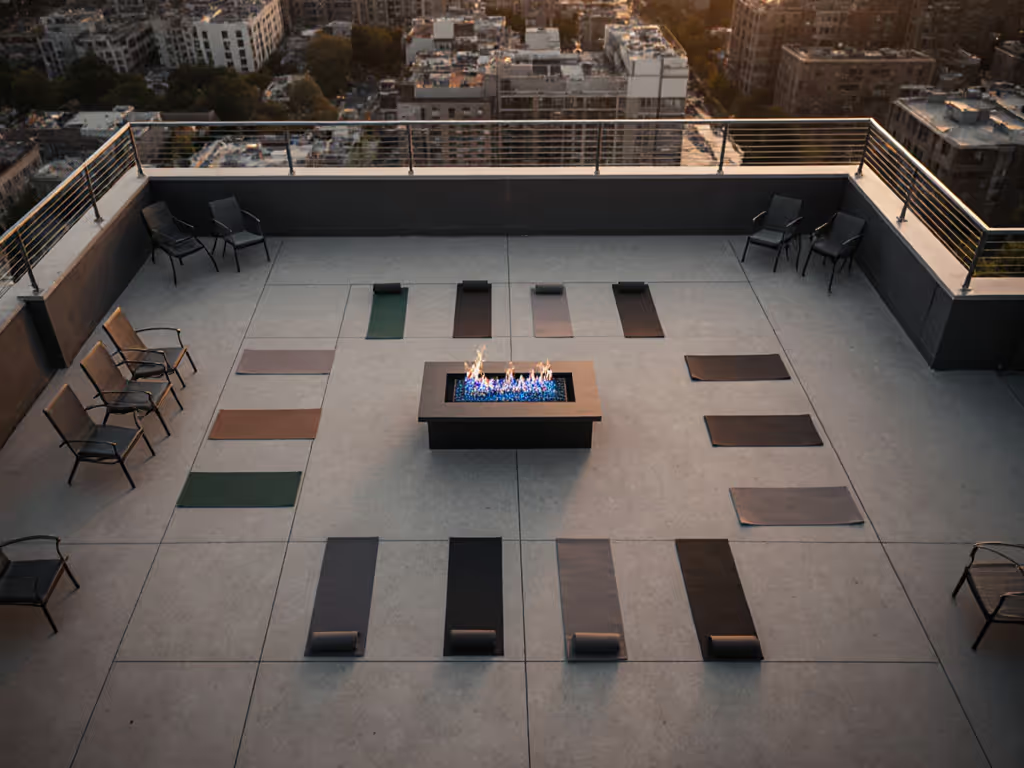
Roof deck
- Consider weight, anchoring, and insurance. Many roof decks are better suited to gas fire tables or no-flame lighting than to heavy wood pits.
- Wind is stronger and more variable; default to lower flames and more conservative clearances than the bare minimum. For compliant, low-noise options tested on rooftops, see our rooftop fire pit review.
Further Exploration: Iterating on Your Calm-First Design
A mindful fire setup is not a one-time decision; it's an experiment you refine.
Here are ways to keep improving:
- Log what you change. Note wood type, load size, flame height, wind direction, and neighbor feedback after each session.
- Try a "no-fire" control night. Same yoga sequence, same guests, just candles and blankets. Notice what changes in comfort, breathing, and conversation.
- Add simple measurement. A low-cost sensor on a side table or at the property line can show you how different setups affect PM2.5 and VOCs over the evening.
- Co-design with neighbors. Share your protocols with the most affected neighbors or HOA; having a clear plan often builds trust faster than any scented candle.
Over time, you'll arrive at a ritual where the fire supports the practice instead of dominating it. Cleaner burns travel farther than apologies and air purifiers, and in shared air, that's the most generous form of hospitality you can offer.
For yoga and meditation, the goal is simple: a flame that you barely have to think about, because the heavy lifting is already done by good design. Cleaner by design, not by accident.
Related Articles
Outdoor Living & Design
ADA Fire Pit Design: Wheelchair-Accessible Backyard Solutions
18th Jan•7 min read